Failure
Once you’ve been around renovations for a while, you start to get a feel for projects and expectations.
Replacing a furnace, for example, is obviously going to be difficult. It is large, heavy, connected to several different systems, and capable of either heating your home or filling it with carbon monoxide. Nobody looks at a furnace replacement and thinks, I’ll knock that out before lunch.
A thermostat is different.
A thermostat is a little plastic box held to the wall with two screws. It has a few wires behind it. You remove the old one, connect the new one, and congratulate yourself on joining the modern world.
Or so I thought.
Downstairs, we have a Nest programmable thermostat controlling the main heating system. Came with the house. I use the hell out of it. With a minute of programming, I’ve got it to drop down a few degrees while we sleep, warm up a bit right before I get up to make coffee, and adjust efficiently throughout the day. I keep an eye on temps while away on vacation. It’s awesome. At Grandview, where several different heating systems divide responsibility for various portions of the house, having that kind of oversight and control brings peace of mind.
Upstairs, though, was another story.
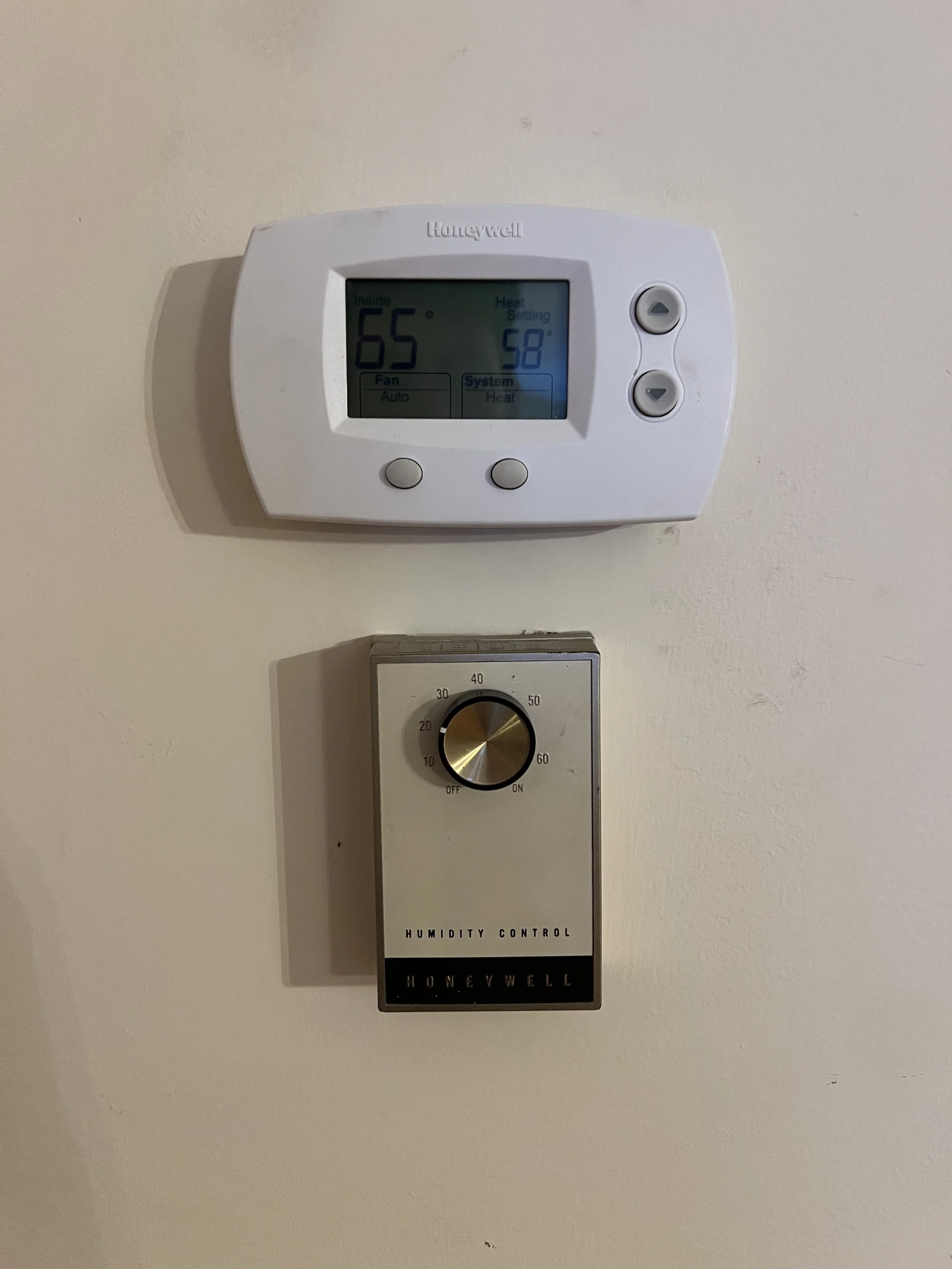
The upstairs has it’s own furnace, and was controlled by a basic Honeywell thermostat. It worked perfectly well, provided your expectations were limited to making the heat turn on when you moved the temperature up and turn off when you moved it down. There was no schedule, no remote access, and no intelligence beyond a small digital display.
Since the downstairs system already had a Nest, I assumed the upstairs could support one too.
This was the full extent of my technical analysis.
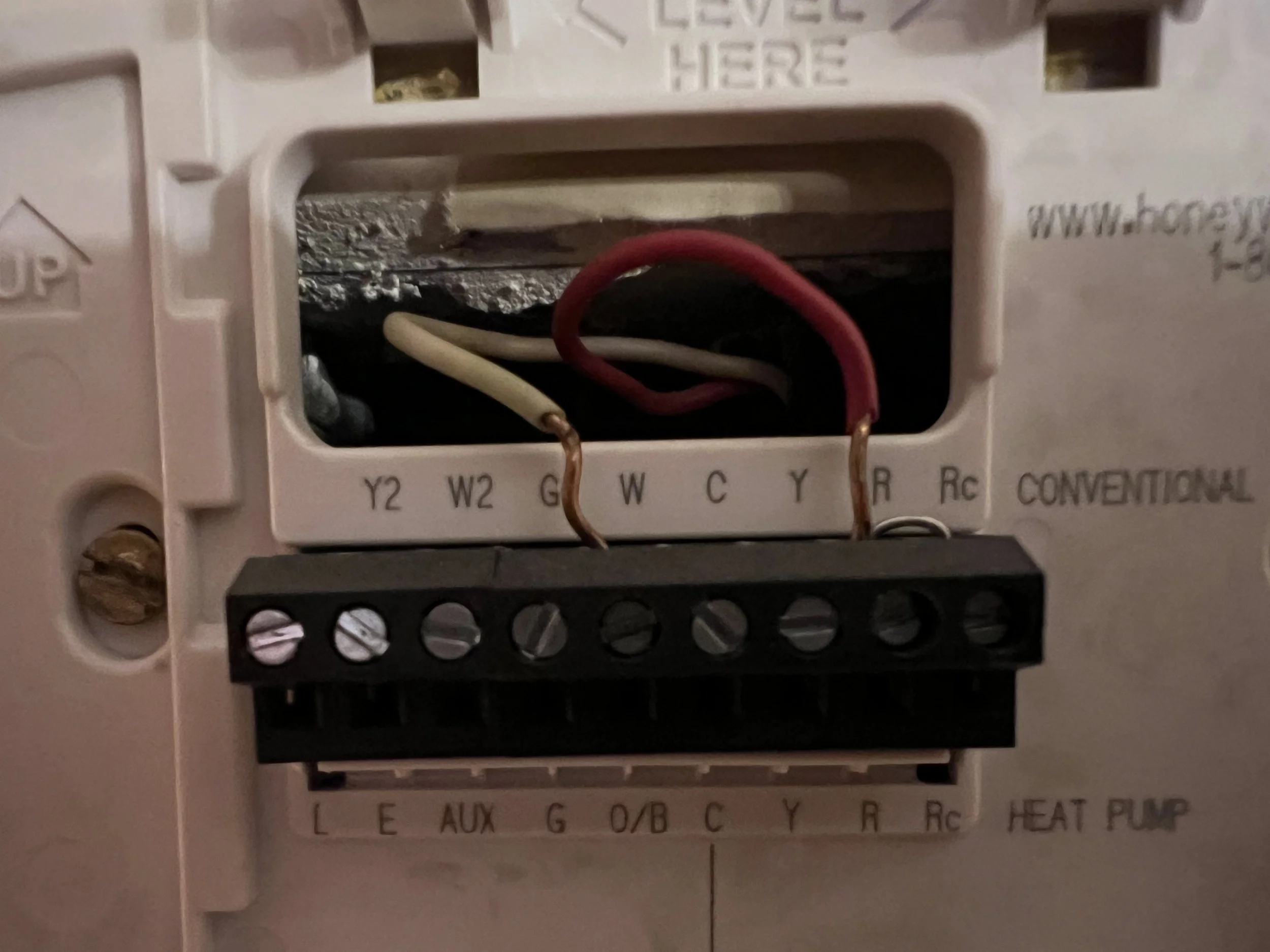
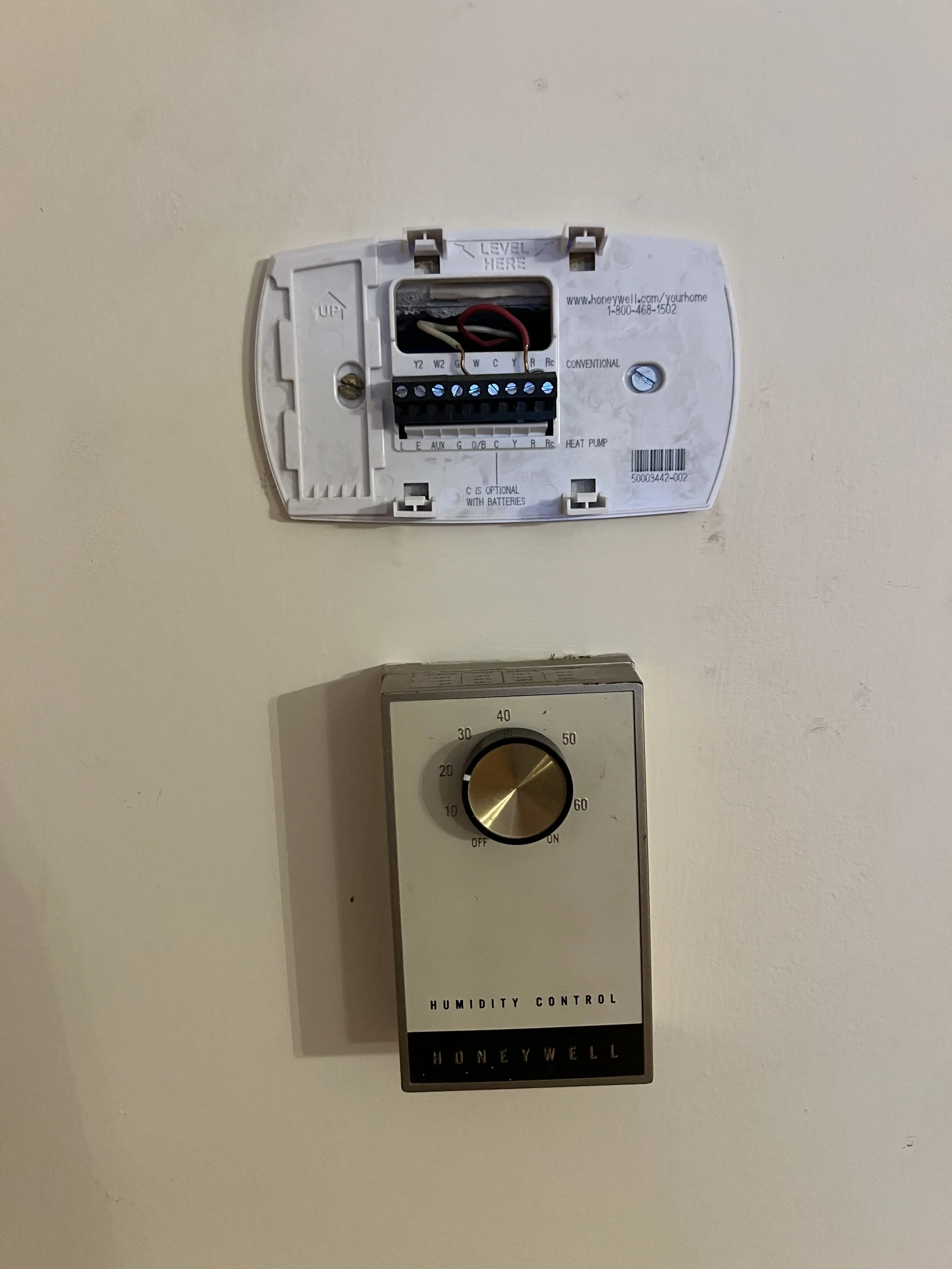
I ordered an updated Nest, opened the box, and removed the Honeywell from the wall. Behind it, I found two wires: one connected to R and one connected to W.
That is about as simple as a heating circuit gets. The thermostat does not really power anything itself. When the room gets cold, the old Honeywell closes the circuit between those two wires and tells the furnace to run. When the room reaches the desired temperature, it opens the circuit again.
The problem is that a smart thermostat needs more than the ability to open and close a switch. It needs a continuous source of electricity to run its screen, Wi-Fi connection, sensors, and whatever other thinking it does while hanging on the wall.
Most modern systems provide that power through a common wire, generally called the C wire.
I did not have one.
The Nest initially suggested that it might be able to operate without a common wire. It could not. It then recommended installing a Nest Power Connector, a small adapter intended to provide power in systems like mine without requiring a new thermostat cable to be run through the house.
Google apparently offered the part for free under certain circumstances. The link did not work. After spending enough time clicking through support pages to become irrationally angry at a $20 electrical component, I just bought one myself.
When it arrived, I went back to work.
I followed the instructions exactly.
It did not work.
I reread the instructions and followed them again.
It still did not work.
Then began the less disciplined phase of the project, in which I tried every plausible wiring arrangement I could think of while repeatedly checking diagrams, watching videos, and convincing myself that I must be one connection away from success.
The Nest would wake up but not call for heat. Or it would report that it did not have power. Or the furnace would do nothing at all. Each attempt produced a slightly different version of failure, which was just encouraging enough to keep me going.
This continued for the better part of two days.
Thermostat projects are especially frustrating because there is almost nothing to show for the effort. When you replace a window or repair a wall, even a difficult job leaves behind visible progress. With this one, I stood in front of the same small rectangle of painted plaster, moving two wires among several tiny terminals and slowly becoming less confident that I understood electricity at all.
Eventually, I did the only sensible thing left.
I removed the Nest, disconnected the power adapter, and reinstalled the old Honeywell.
The furnace started immediately.
There is something particularly humiliating about being rescued by the exact piece of outdated equipment you were attempting to replace. The Honeywell had spent the entire ordeal sitting quietly on a nearby table, asking nothing of me and apparently knowing it would eventually be invited back.
So the upstairs bedrooms once again have a thermostat that performs exactly two functions. It turns the heat on, and it turns the heat off.
The Nest is back in its box. The power connector is waiting beside it. At some point I will trace the thermostat wiring all the way back to the furnace, understand precisely how the controls were installed, and figure out whether the adapter can be made to work or whether I need to run a new cable.
But not today.
One of the strange lessons of working on an old house is that the apparent size of a project has almost no relationship to its actual difficulty. A massive furnace can sometimes be replaced according to a clear sequence of steps. A tiny thermostat can consume an entire weekend and leave you exactly where you started.
Grandview is very good at keeping me humble.
And, for now, the old Honeywell remains undefeated.