An Axe to Grind
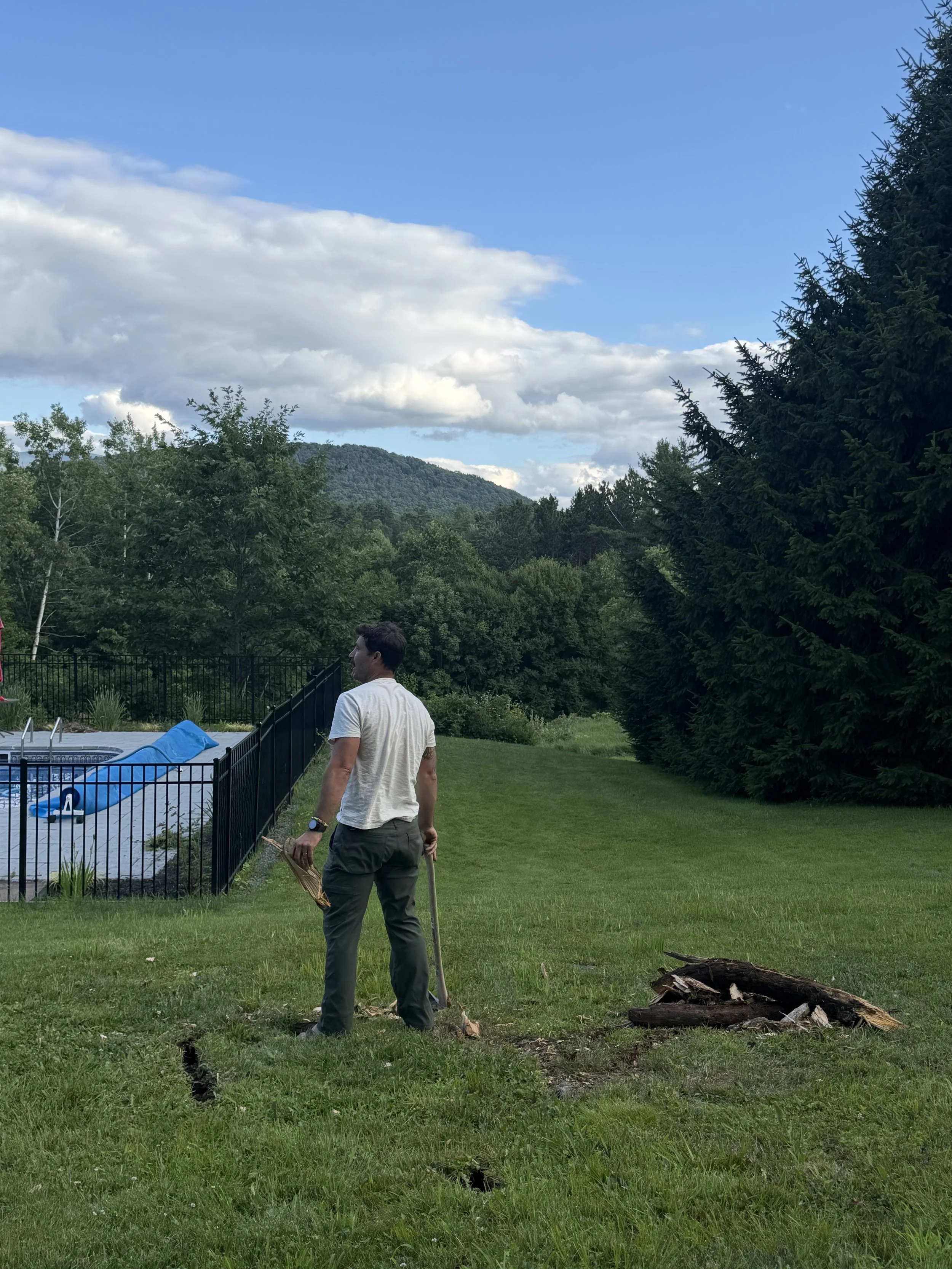
Between the house and the pool, several trees were removed sometime before we arrived at Grandview. Whoever did the work cut the stumps close to the ground, which was probably good enough at the time. But portions of the stumps remained, along with a network of large roots running just above the surface of the lawn.
They were low enough to mostly disappear into the grass, but high enough to be a problem.
Every time I mowed that section of the yard, I had to slow down and carefully work my way around them. Even when I knew roughly where they were, the grass could hide an edge or a raised section of root. Every so often, the mower deck would find one. There would be a bang from underneath the machine, followed by the familiar moment of wondering whether I had just destroyed another blade (I’m already on my second set this season).
The roots were also ugly. Not offensively ugly, perhaps, but conspicuous enough to make that part of the lawn feel unfinished. They were remnants of work that had been mostly completed years ago, but not quite. The trees were gone. The obstacle remained.
It was not the end of the world. It was just a thorn in my side.
Today, I decided to do something about it.
There are probably more sophisticated ways to remove old tree roots. A stump grinder would have made quick work of everything. An excavator could have pulled the whole mess out of the ground. Even a reciprocating saw might have been a more civilized choice.
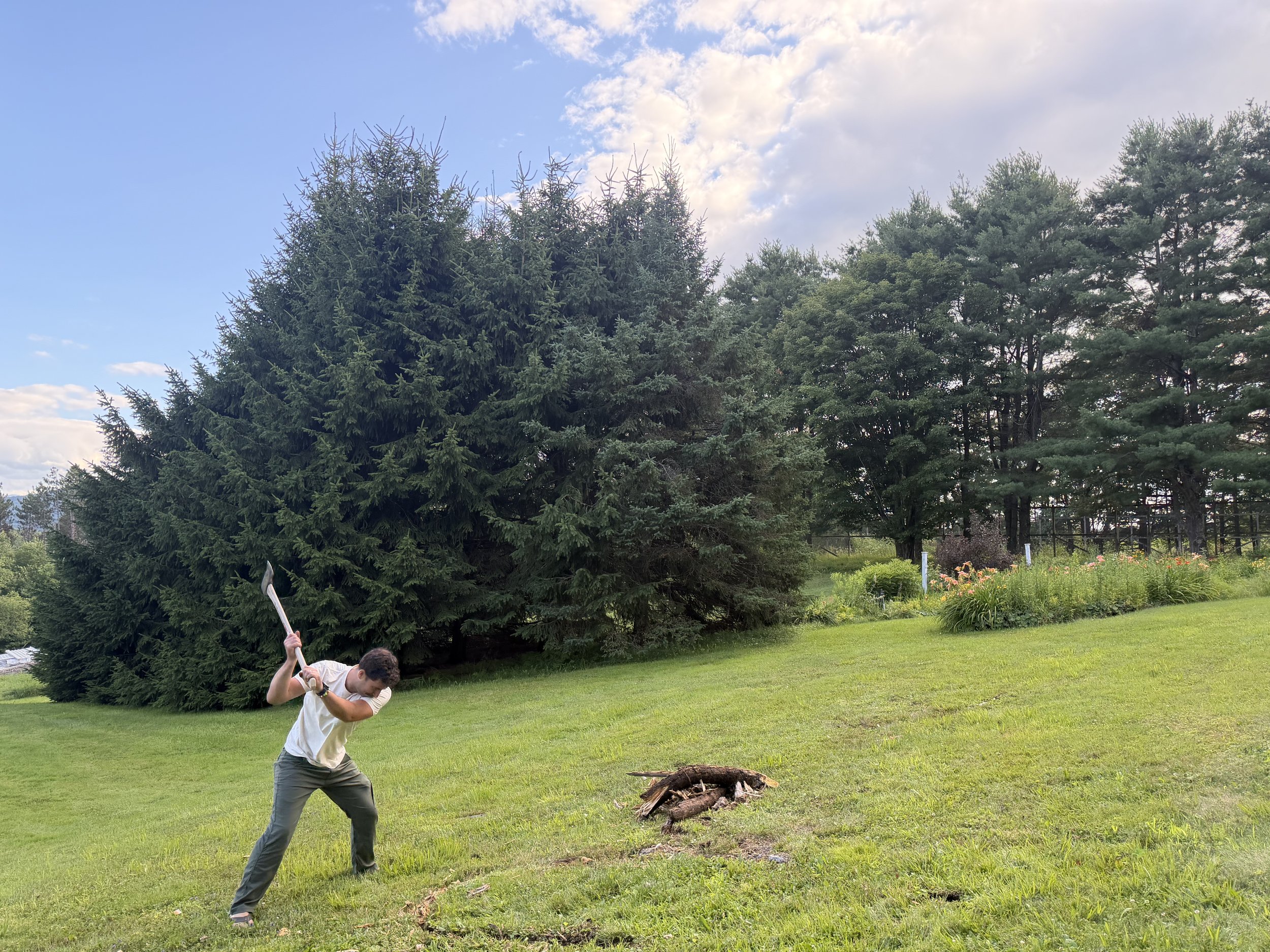
I used an axe.
This was partly because I already owned one, and partly because the roots looked manageable from above. That was perhaps an optimistic assessment.
Old roots do not necessarily become weak in a useful way. The exterior rots and splinters, while the sections buried below the grass remain dense, tangled and remarkably committed to staying where they are. Every root seemed to lead to another root. Every chunk I removed revealed another section underneath it.
The process was repetitive: clear away the grass and soil, chop through the exposed wood, pry out whatever would move, and then start again a few inches farther along.
Chopping tree roots with an axe is a pain in the ass.
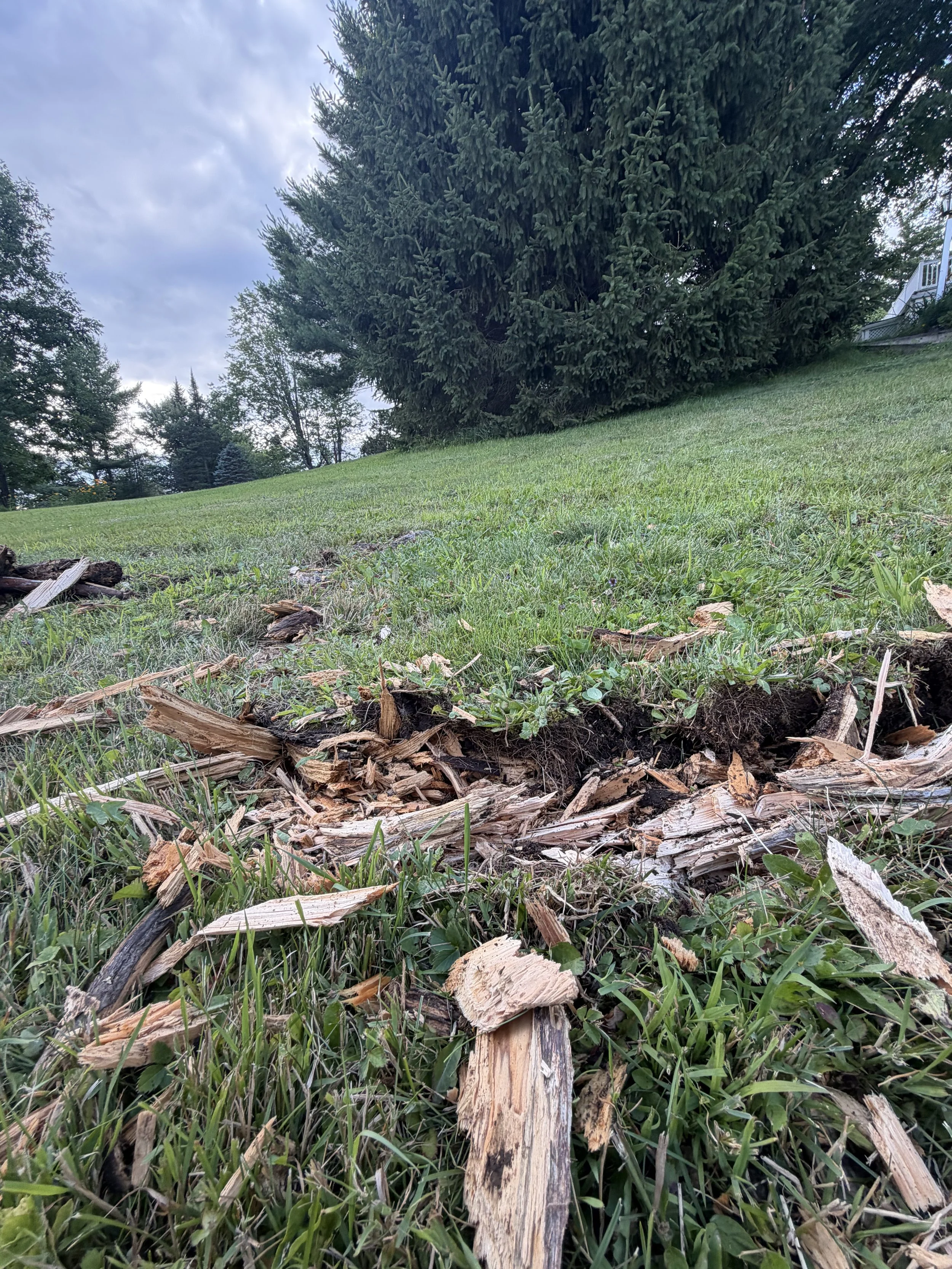
The axe would occasionally bite deeply and stop dead. Other times it would hit decayed wood and send fragments flying across the lawn. Soil dulled the blade quickly. I found some hidden rocks. The roots absorbed far more punishment than seemed reasonable for something that had technically been dead for years.
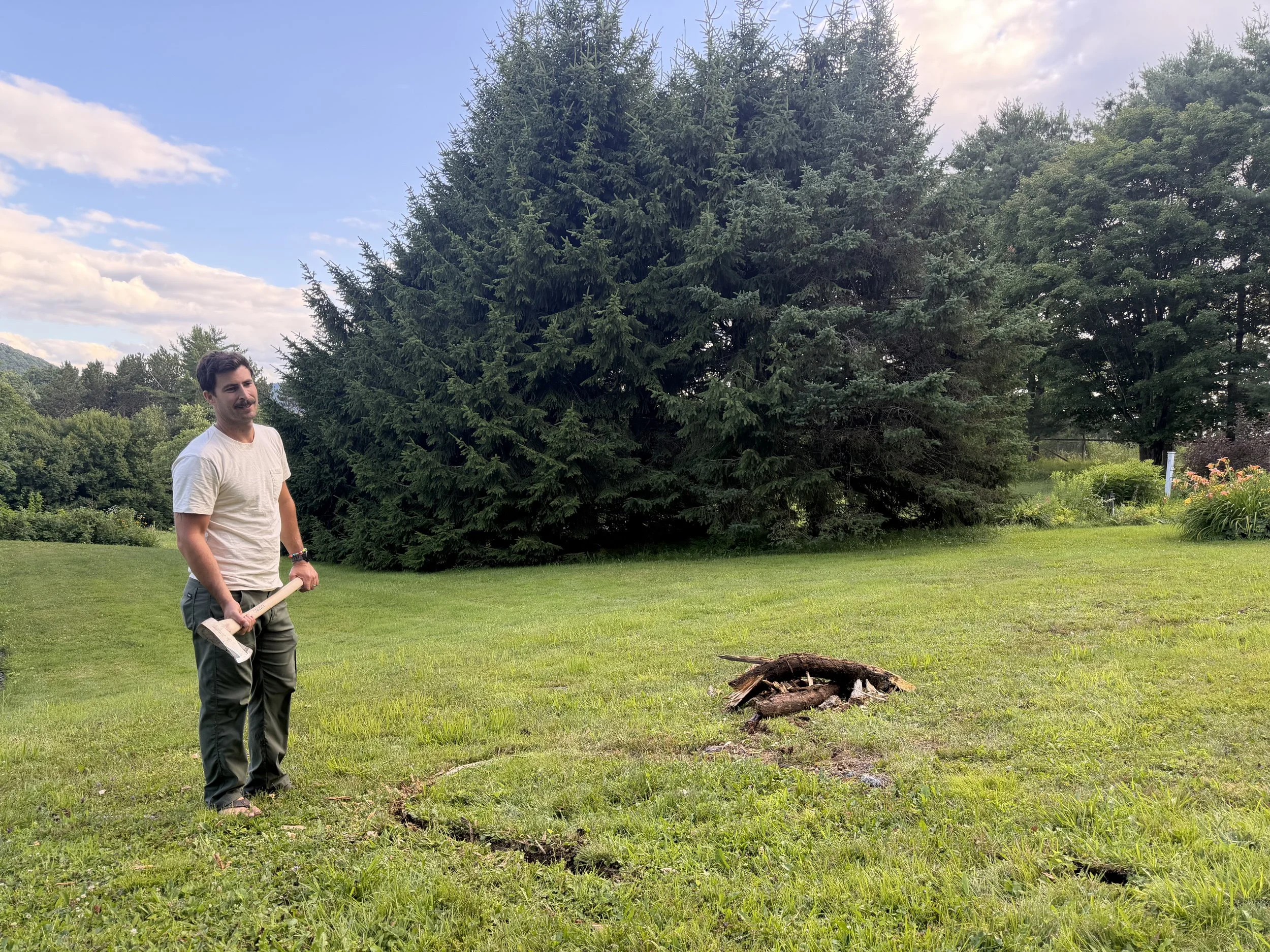
But the pile of broken wood slowly grew.
After a few hours, most of the raised roots were gone. The remaining pieces were either below the mowing height or small enough that I could deal with them later. What had been a scattered network of mower hazards had become a rough patch of disturbed soil and wood chips.
The lawn does not look finished yet. It will need to be cleaned up, filled with soil and reseeded. There are still a few stubborn sections waiting for another round with the axe.
But the hard part is mostly done.
This was not a glamorous project. It did not transform the house or add measurable value to the property. Most people would probably never have noticed the roots in the first place.
I noticed them every time I mowed.
And now, for the first time since we arrived, I will be able to drive through that section of lawn without slowing down, steering around invisible obstacles or waiting for the sound of steel meeting wood. Plus, I got a decent workout in. Not a bad Sunday afternoon.