What Lies Beneath
This property is pretty incredible from a landscaping perspective.
Acre upon acre of earthwork. Each slope, field, and grove designed and constructed with intention. None of it feels accidental. The lawn rolls away from the house in broad, deliberate gestures. The garden beds sit where they sit because someone wanted them there. The old paths, the stone edges, the transitions from open grass to pine shade to tucked-away outbuildings all have the feeling of decisions made long ago by people who were thinking in decades.
What a shame to have to rip it apart.
But we did.
At least a portion of it.
One of the primary offenses that came with Grandview when we bought it was the propane system. “System” may be too generous a word. It was really more of a historical artifact: a rotting and leaky 500-gallon above-ground tank way out in the woods, feeding a series of buried copper lines that branched off at unknown underground locations and headed toward the house and pool house like some kind of fossilized nervous system.
No schematic. No shutoffs. No local supplier willing to touch it.
Which, to be fair, was probably the correct response.
The old tank sat far from the house, back in the trees, where it had presumably made sense at some point. Maybe when codes were different. Maybe when suppliers were less concerned about inherited liability. Maybe when the people who installed it knew exactly where everything was and didn’t imagine that, fifty years later, someone else would be standing there with a propane company, an excavator, and a growing sense that the entire arrangement was held together by memory and luck.
By the time we bought the place, both memory and luck had run out.
We survived the winter with a pony tank attached directly to the house. It was not elegant, but it worked. The little temporary tank sat there against the foundation like a bandage. Every time I walked past it, I was reminded that it was a solution only in the loosest possible sense of the word. It got us through. That was all it was ever meant to do.
As soon as the ground thawed this spring, it was time for something permanent.
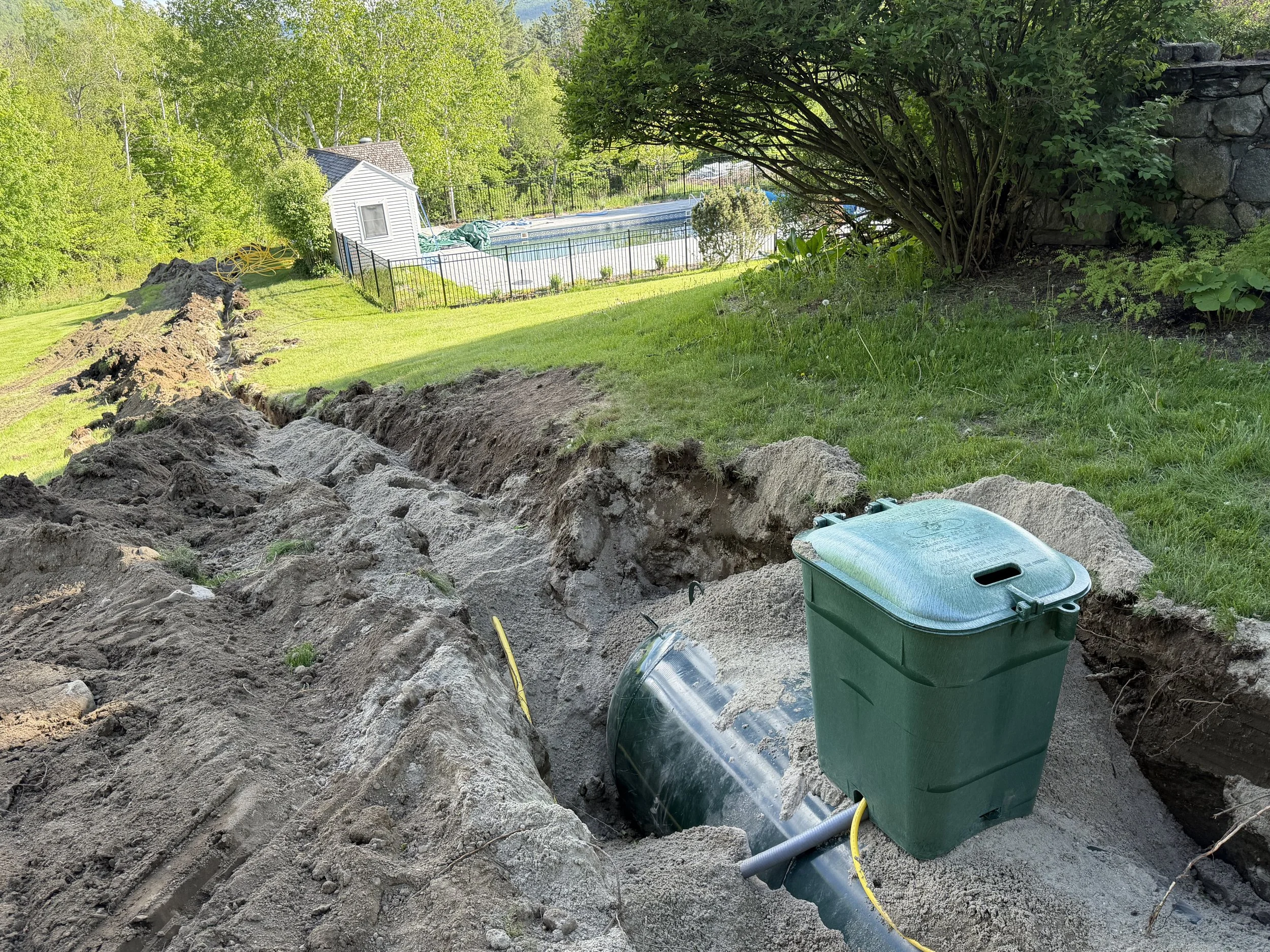
Over the winter, we spoke with a number of suppliers and worked through what the new system should look like. We needed propane to the house. We needed propane to the pool house. We needed a new tank location that actually made sense. And because the old tank location was no longer feasible, we decided to bury a new 500-gallon tank in a more serviceable spot.
On paper, this all sounded fairly straightforward.
In the real world, it meant trenching across the property, replacing buried lines all the way down to the pool house, cutting through lawn, crossing under garden beds, and disturbing parts of the landscape that had probably not been opened up in decades.
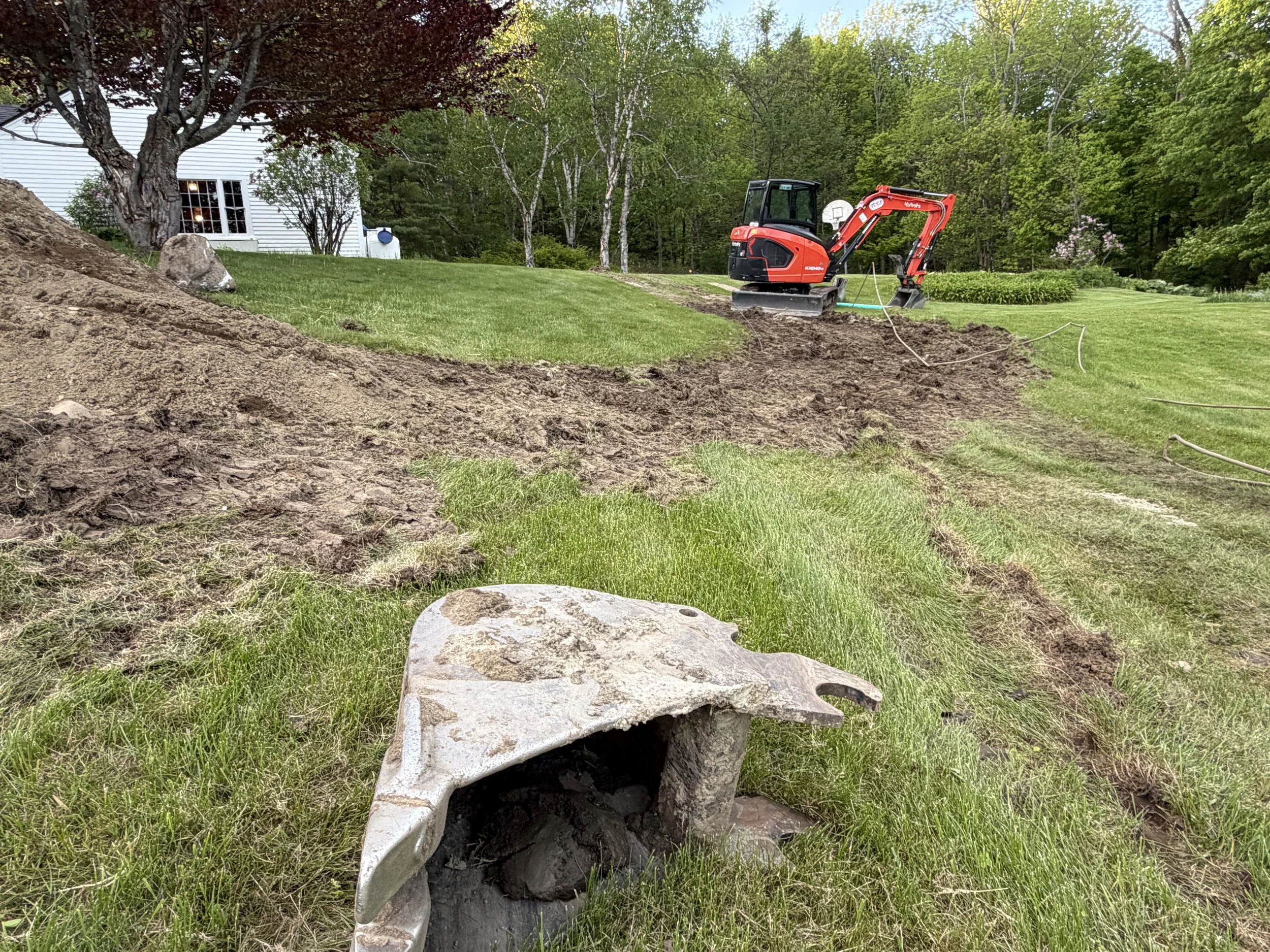
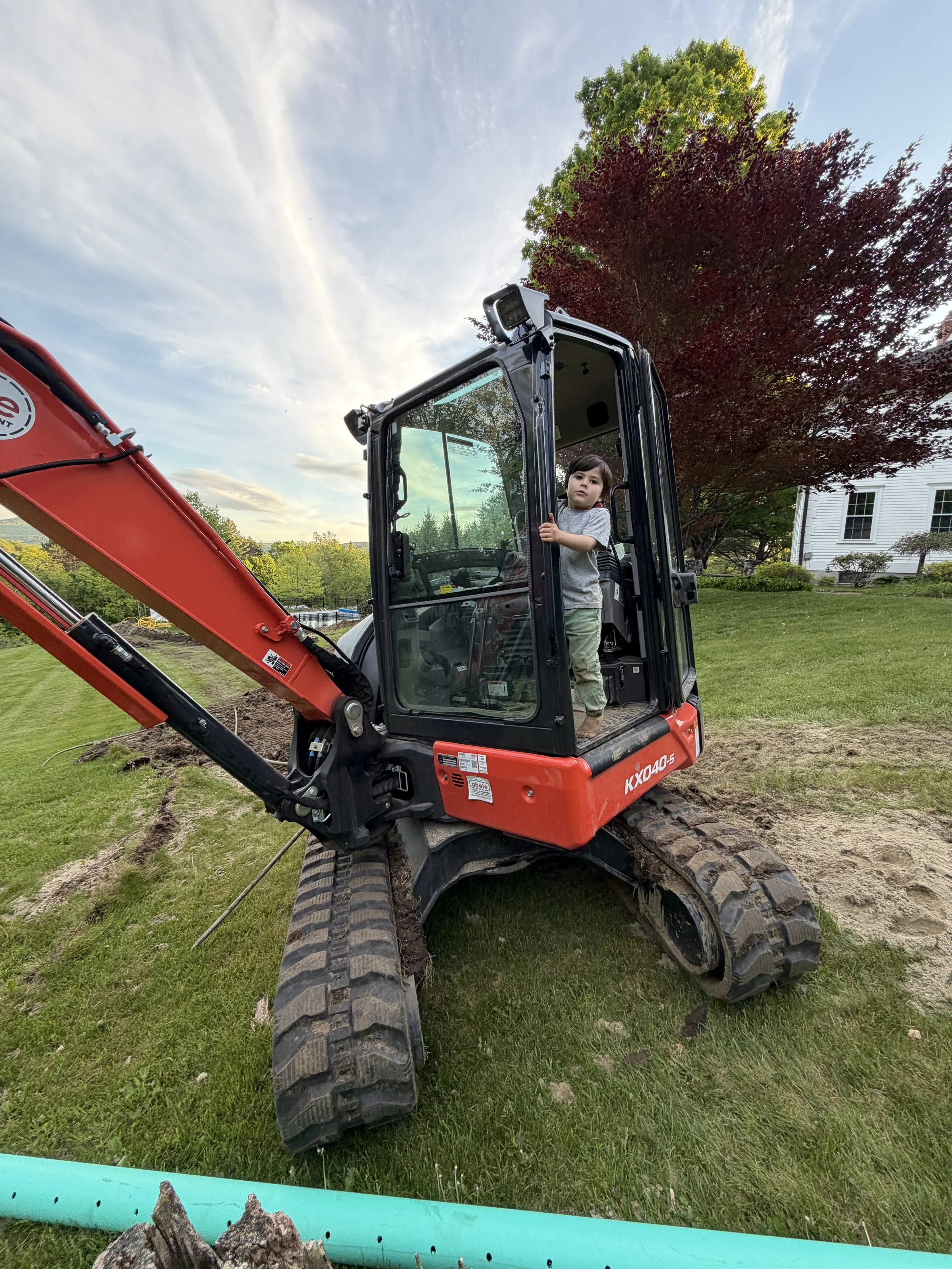
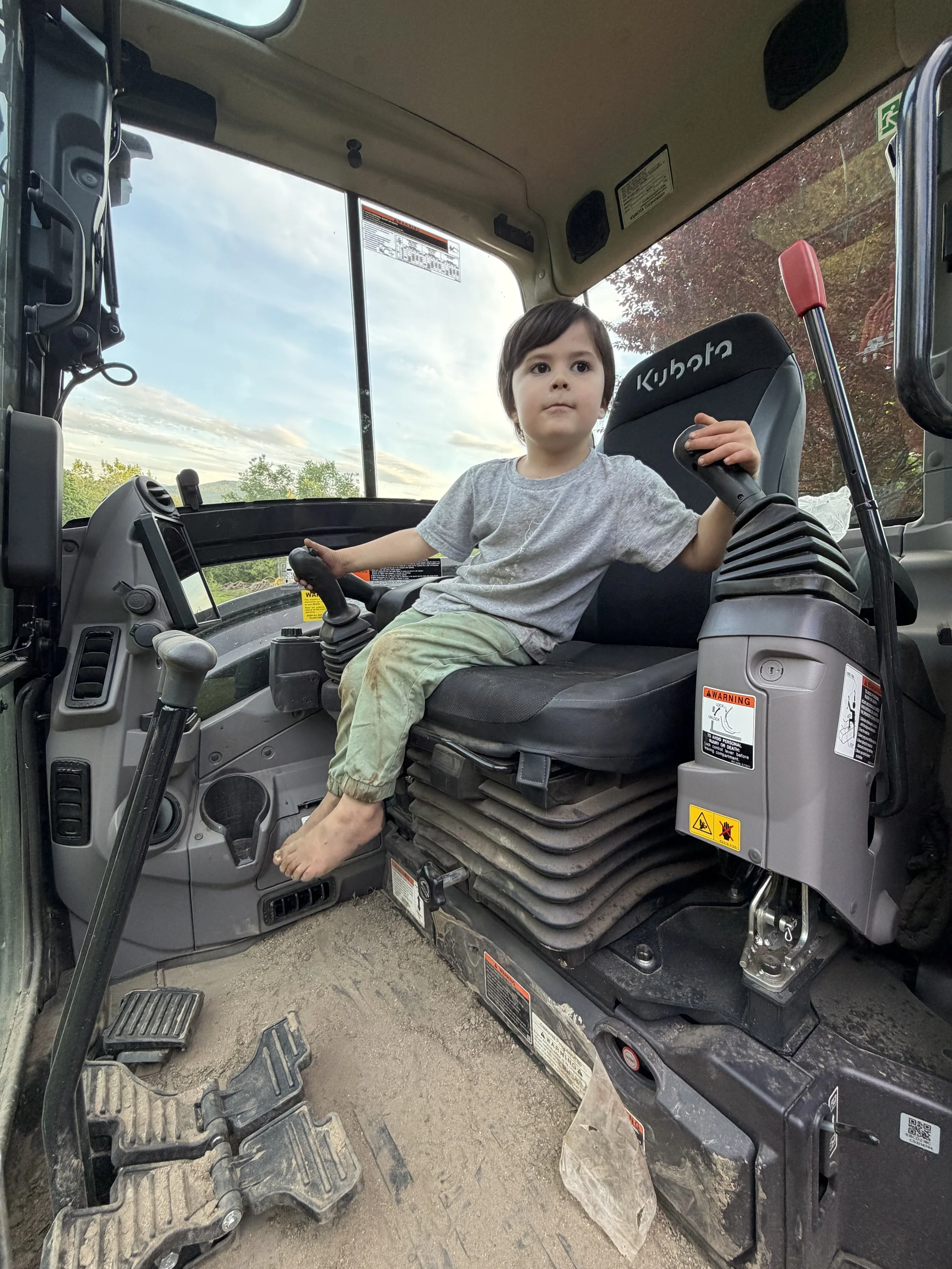
And then the excavator arrived.
There is a particular feeling that comes with watching heavy equipment tear through ground you have spent the better part of a year trying to understand. It is not quite regret. The work needed to happen. There was no romantic version of this project where we preserved every blade of grass and still ended up with a safe, modern propane system. But knowing something is necessary does not make it easy to watch.
The machine moved carefully. The crew was good. We hired a local family-run outfit with a strong reputation, and they earned it. They were thoughtful, practical, and clearly aware that they were working on a property where the land itself is part of the story. They did not treat the place carelessly.
But excavation is excavation.
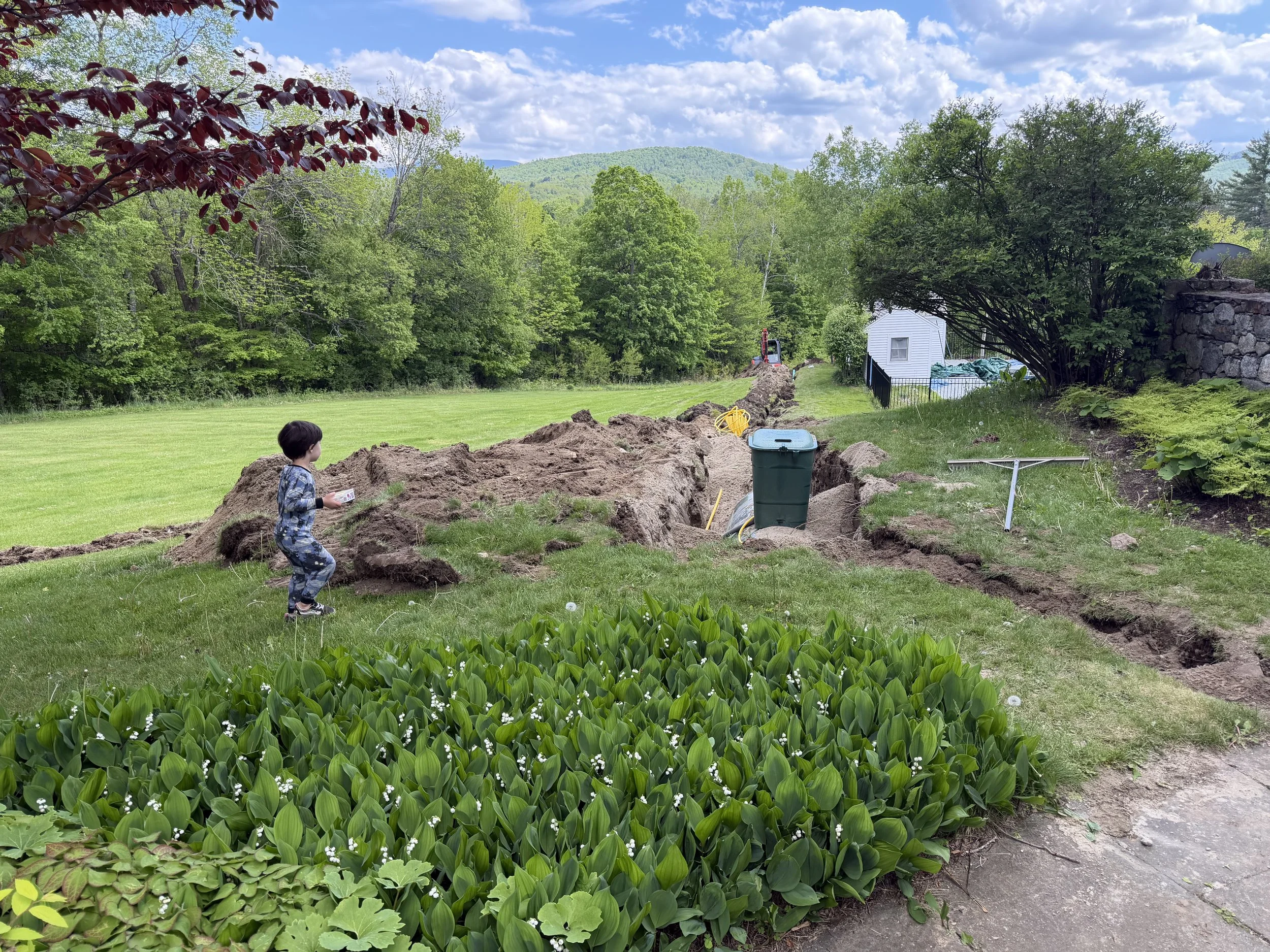
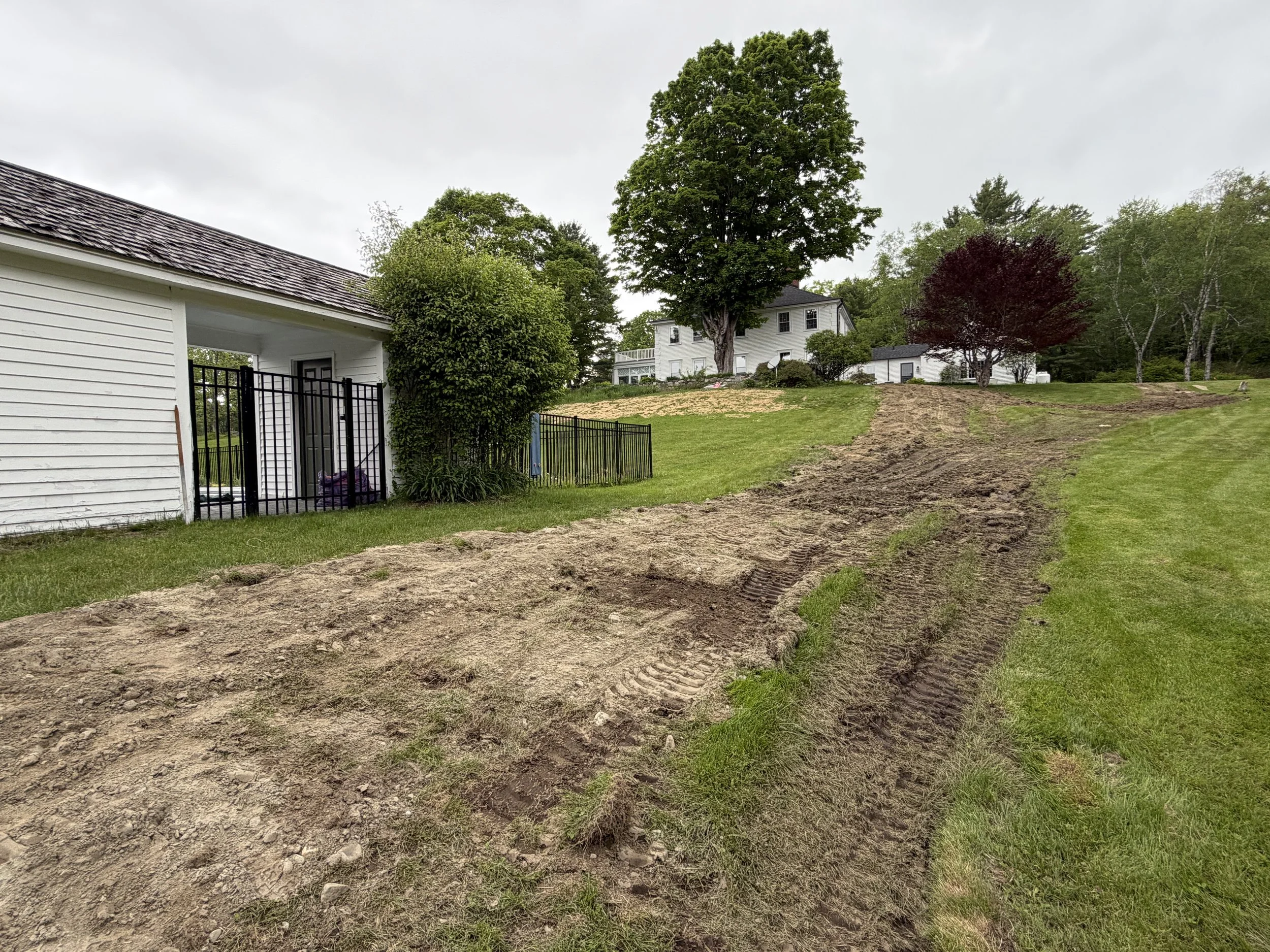
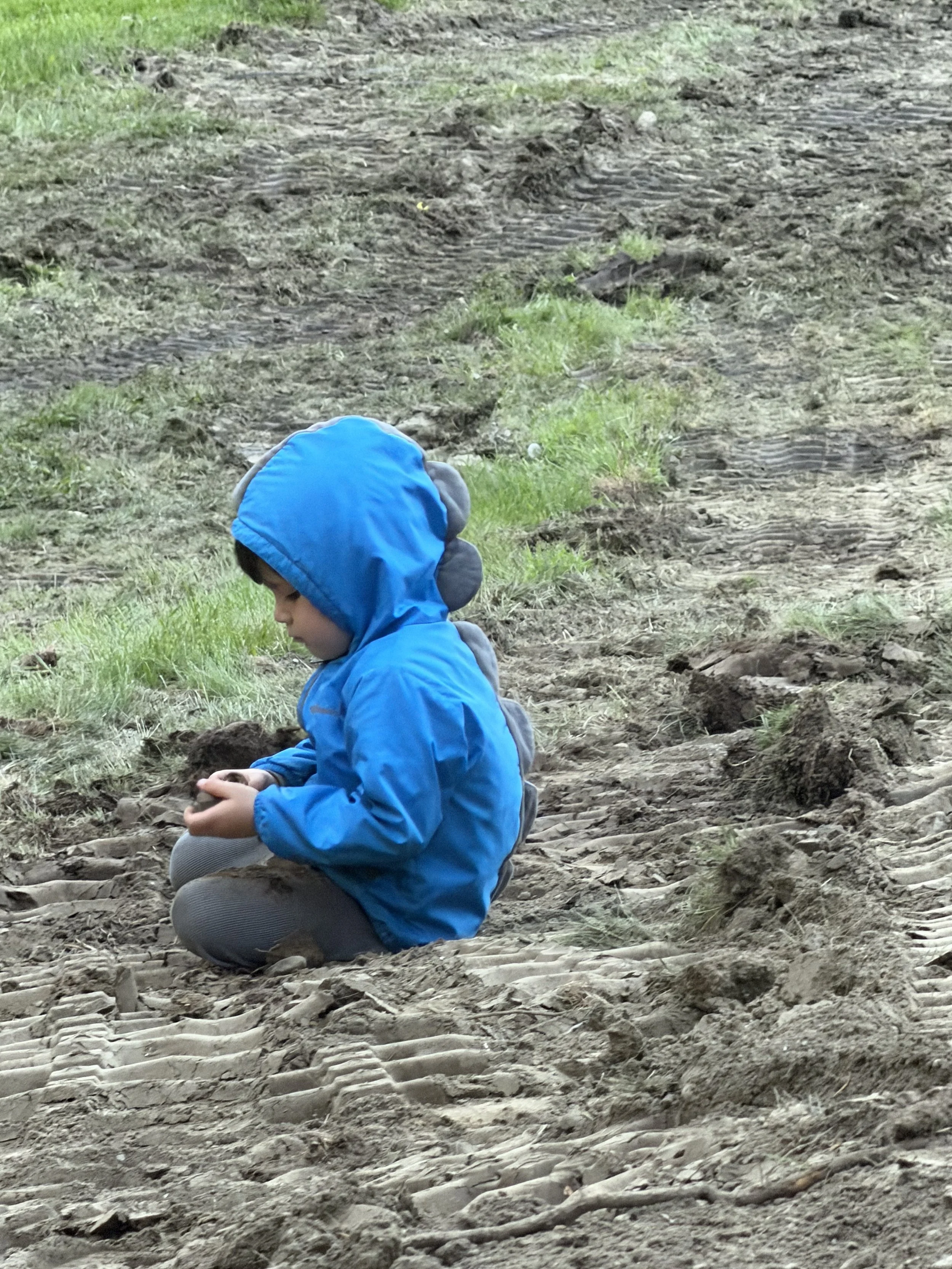
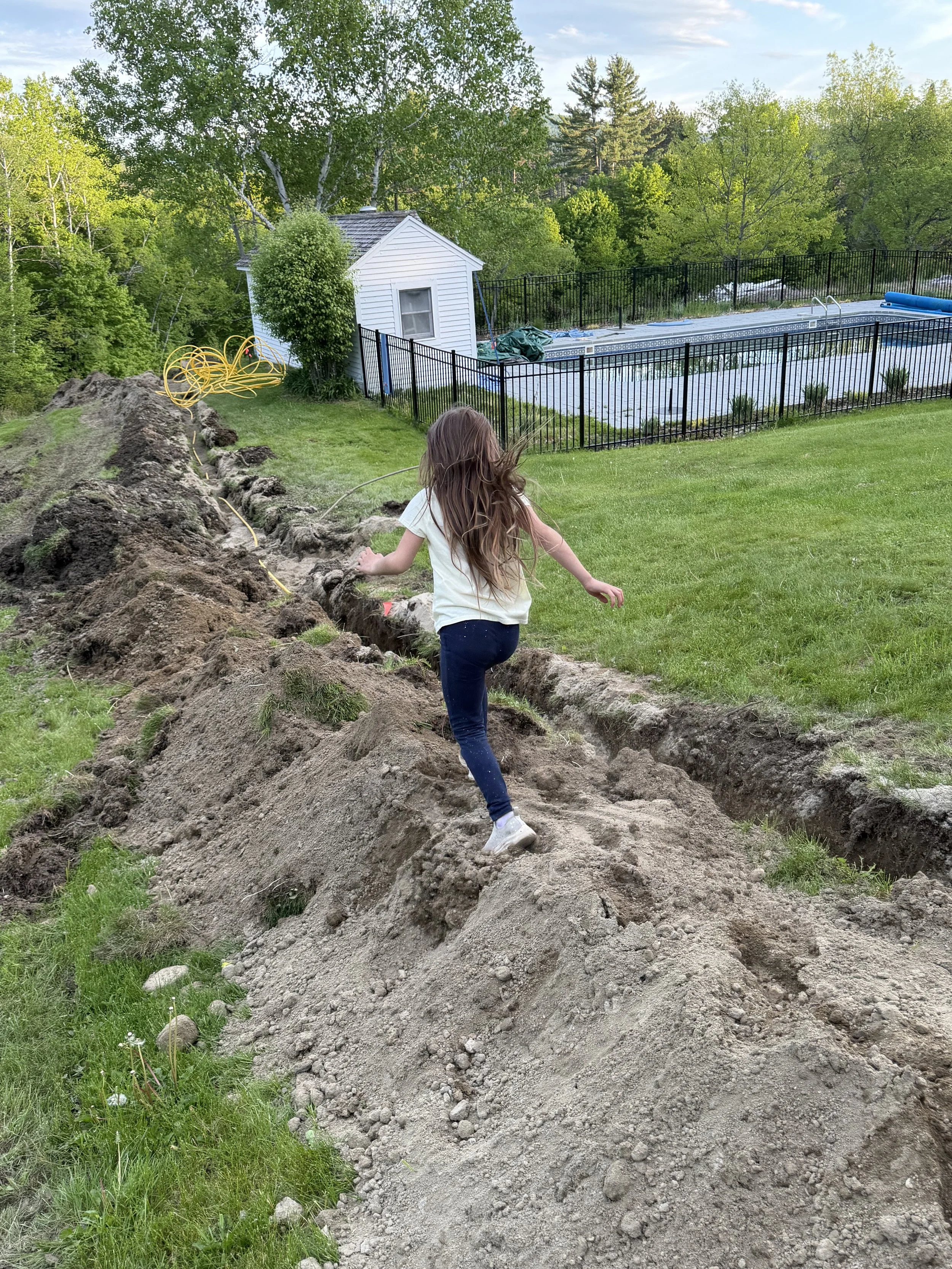
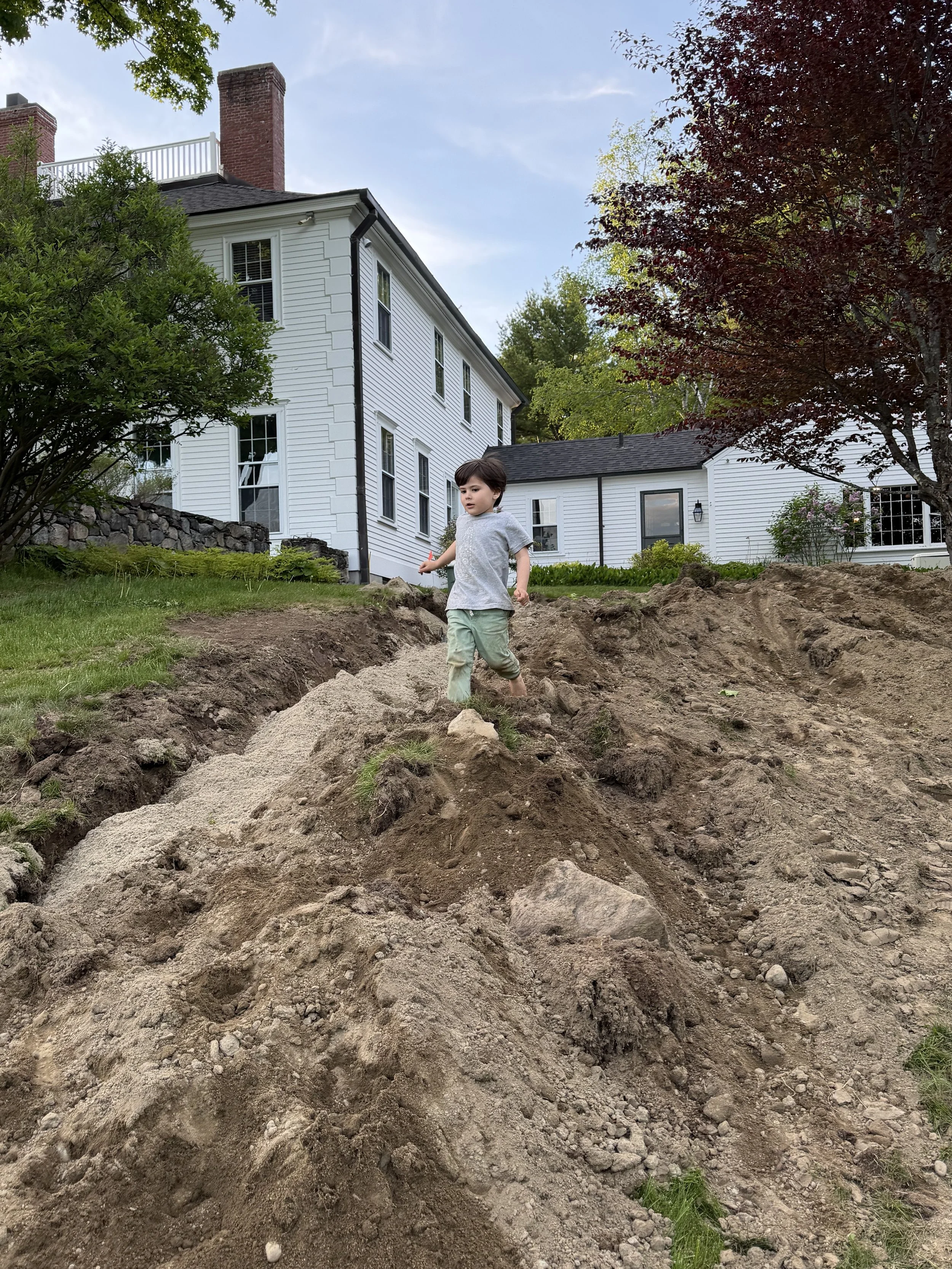
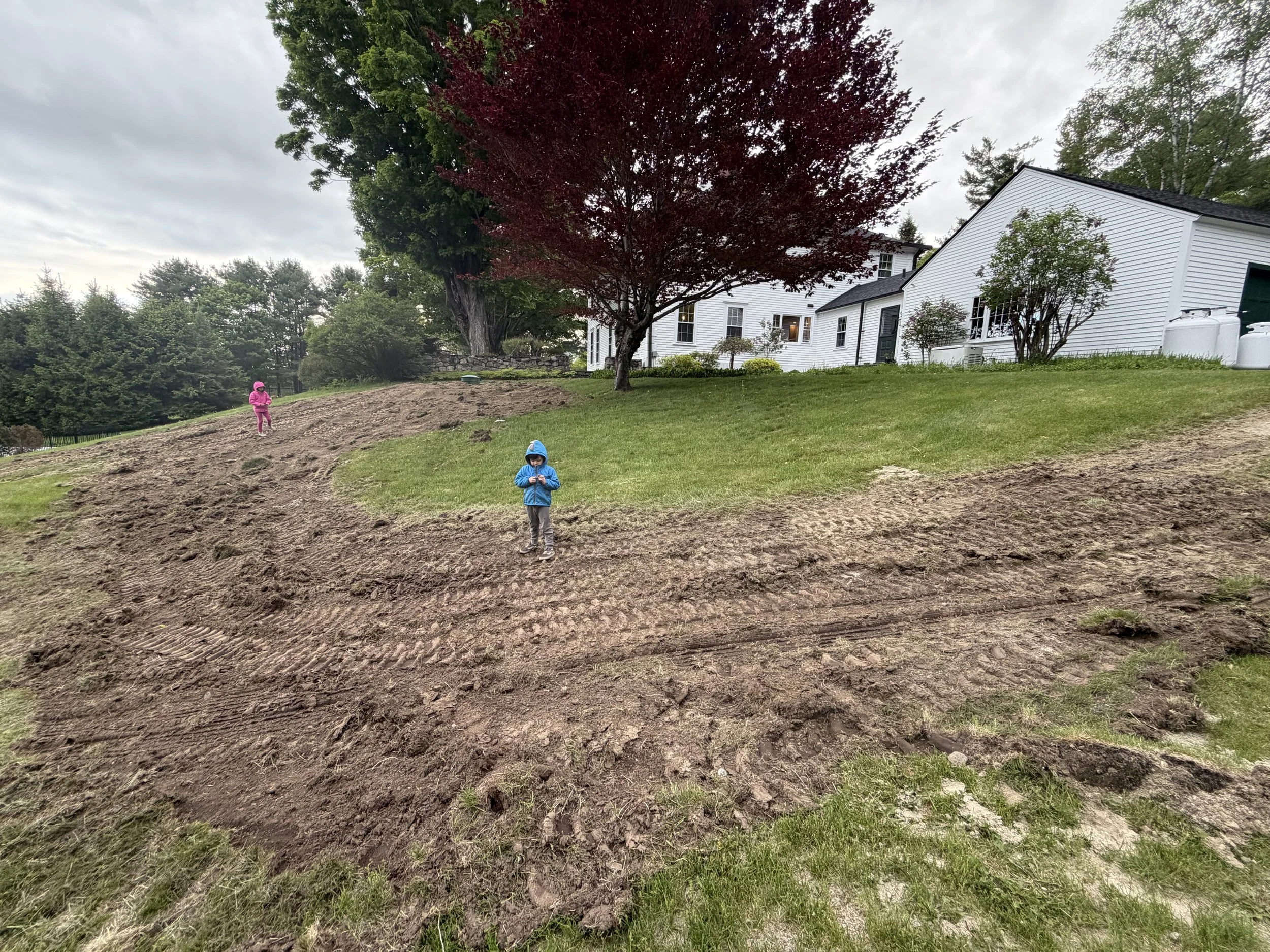
By the end of it, long and wide raw lines of earth cut through the lawn. Piles of soil sat beside disturbed beds. The old quiet transitions between grass and garden and woods were interrupted by tracks, trenches, and scarred ground. The new tank disappeared beneath the soil, which is exactly what we wanted, but everything around it announced the work in the loudest possible terms.
It was one of those projects where the invisible improvement is massive, but the visible aftermath is discouraging.
But, in the middle of all that mess, something wonderful happened.
Halfway between the pool house and the main house, the excavator hit something that turned out not to be propane at all. It was drainage. More specifically, it was the end of the foundation drain from the house.
This explained a lot.
There is a section of the yard that has always been wet. Not damp. Wet. The kind of wet that swallows mower tires, holds footprints, and makes you develop little mental detours around your own lawn. I could never mow it properly because the ground was always too soft to support anything heavier than a weedwhacker. I knew there was a water problem there, but like so many old-property mysteries, it had been sitting in the category of “important, but not today.”
Then the trench found it for us.
Whether the drain broke there at some point or simply terminated there by design, I still do not know. Either option seems plausible. Maybe it once continued farther and failed. Maybe someone thought that was far enough. Maybe the yard was different then. Maybe the slope handled water differently before decades of settling, root growth, and landscape changes. With this house, every answer tends to reveal three older questions.
But the result was clear enough: the foundation drain was dumping water into the middle of the yard.
So while the trench was open and the equipment was already there, the crew ran eight lengths of perforated drainage pipe the rest of the way down the yard.
Eighty feet of pipe.
One enormous problem solved almost by accident.
The change was immediate. The wet section dried out. The same area that had been nearly un-mowable became normal ground. I could drive the mower across it without leaving ruts or wondering whether I was about to bury a tire. We could walk to the pool in a straight line. A whole part of the property that had been functionally off-limits suddenly came back into use.
It was, in the strange arithmetic of old-house projects, a gift.
Not a free gift, obviously. Nothing here is free. But it was never going to be cheaper, easier, or more efficient to solve that drainage problem than it was in that moment, with an open trench already running across the yard and machinery already on site. Had we tried to fix it later, it would have meant another project, another mobilization, another scar across the lawn, another round of disruption.
Instead, the propane project absorbed it.
A problem I had been quietly stepping around for months disappeared inside a project I was already bracing myself to endure.
This is one of the maddening and wonderful things about working on an old property. You start one project and uncover another. Usually, that sentence means bad news. A little rot becomes a lot of rot. A simple repair exposes a previous shortcut. A small leak points to a larger failure. The house or the land coughs up some buried complication, and the scope expands whether you invited it to or not.
But sometimes the opposite happens. Sometimes the mess reveals the fix.
The propane system is now safer, cleaner, and far more sensible. The buried tank is in. The lines are known. The house and pool house are properly served. A future propane supplier will not have to stare into the woods and wonder what century they have stepped into. From a systems perspective, this was a major step forward.
And because of the drainage discovery, the project did more than modernize the propane. It changed the way the yard functions.
From a landscaping perspective, however, it still looked like a battlefield.
So now my part begins.
The machines have left. The professionals have done the work that required professionals. What remains is the finishing manual labor: raking the topsoil back into place, breaking apart clumps, pulling out rocks, leveling the trenches, reshaping the edges, and trying to persuade the property to heal.
It is strange work because it feels both small and endless. One rake stroke at a time. A few square feet brought back into order. A little more soil feathered into the lawn. A little more evidence softened. Then I look up and realize there are still long stretches ahead of me.
This is the part of old-house stewardship that does not photograph particularly well. The dramatic moment was the excavation. The satisfying moment will be grass returning. But the middle is just a man with a rake after work, sweating in the evening light, trying to make the ground look like it was never disturbed.
I have learned that Grandview rarely lets us make improvements without taking something in exchange.
A safer electrical system cost us walls opened and old mysteries exposed. A working furnace cost us time, money, and a deeper understanding of just how many systems in this house were limping along. The pool required chemistry, patience, and more filter cleaning than I care to remember. And this propane project, necessary as it was, cost us a temporary loss of beauty.
But it also gave something back.
That feels important to remember. The trench was not just a wound. It was also an opportunity. It let us replace a propane system that had no business continuing on in its old form, and it let us discover and extend a foundation drain that had been quietly ruining a section of the yard. The same scar that made the landscape look battered for a while also made the property function better than it had in years.
That is the bargain, I think.
To care for a place like this, you sometimes have to damage it in order to preserve it. You cut into the landscape so the house can function. You tear out old systems so new ones can safely take their place. You make a mess now so that future versions of the property can feel settled again.
Still, there is no denying the emotional whiplash of it.
One day you are admiring the sweep of the lawn and the old intentionality of the place. The next, you are staring at trenches and tire marks and trying to remind yourself that this is progress.
Eventually, the grass will come back. That is the hope, anyway. I will seed it, water it, and probably overthink it. Some areas will take. Some will wash out. Some will need more attention. By late summer, maybe the scars will be faint. By next year, perhaps we will have to point them out to remember exactly where the trenches ran.
That is the generous thing about land. Given enough help, it has a way of absorbing our disruptions.
For now, the project sits in that uncomfortable middle stage: the system is fixed, but the evidence remains. The buried tank is doing exactly what it is supposed to do, quietly and invisibly. The new lines are in the ground. The pool house has propane. The house has propane. The yard is drying where it used to stay wet. The old improvised arrangement in the woods is no longer our problem.
And I am left with a rake, a pile of seed, and a renewed appreciation for the people who shaped this property in the first place.
Because it is one thing to inherit a beautiful landscape.
It is another thing to keep it working.