Making Room
The weather has been unusually cooperative lately, and we’ve been taking full advantage. There was no single major project. Instead, we addressed a variety of smaller projects; trees blocking the view behind the pool, stumps complicating the upper lawn, hedges creeping into the road, and a stack of raised garden beds I’ve had since March.
A property like this feels like it can absorb nearly unlimited neglect without anything truly catastrophic happening. The view get obstructed by new growth. The lawn becomes coarse and patchy. A garden isn’t weeded. Each thing remains tolerable on its own, which makes it easy to leave alone.
That is, until my dad comes to visit.
For as long as I’ve owned any property, my dad’s visits were little more than an excuse to do a project. Every time he visits, he identifies a project, we complete it, and he goes home. This time, it was raised bed gardens. He knows the raised beds have been sitting on my list for months… they hadn’t moved since the last time he visited. So shortly after arriving, he suggested that we finally build them. By “suggested,” I mean that the project was now happening.
While often frustrating, this is honestly one of my favorite things in life. Nearly every time he visits, we end up working on something together. We identify a problem, make a plan, and we get to work. By the end of the visit, the project is either complete or in a condition where I can finish it on my own.
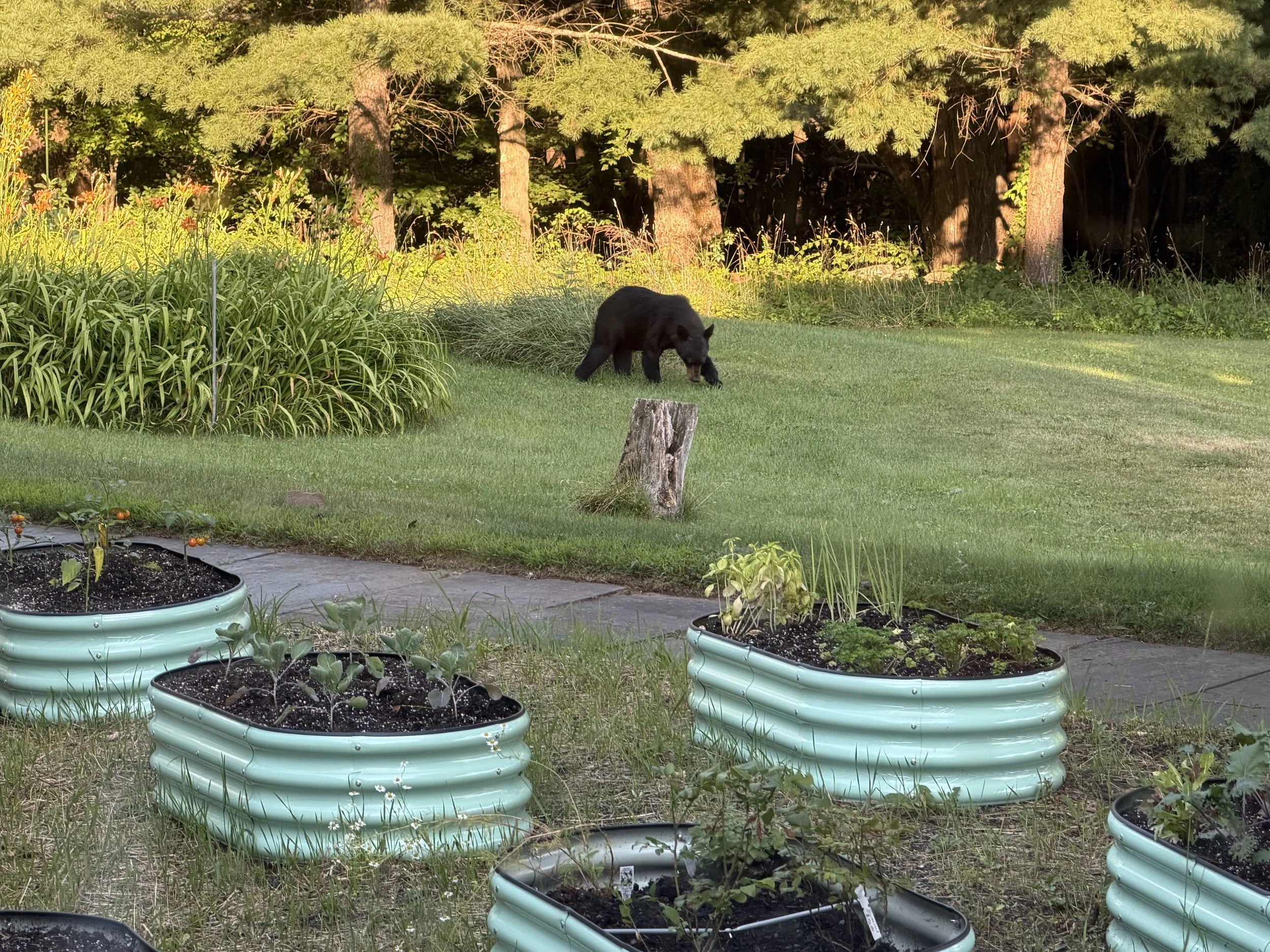
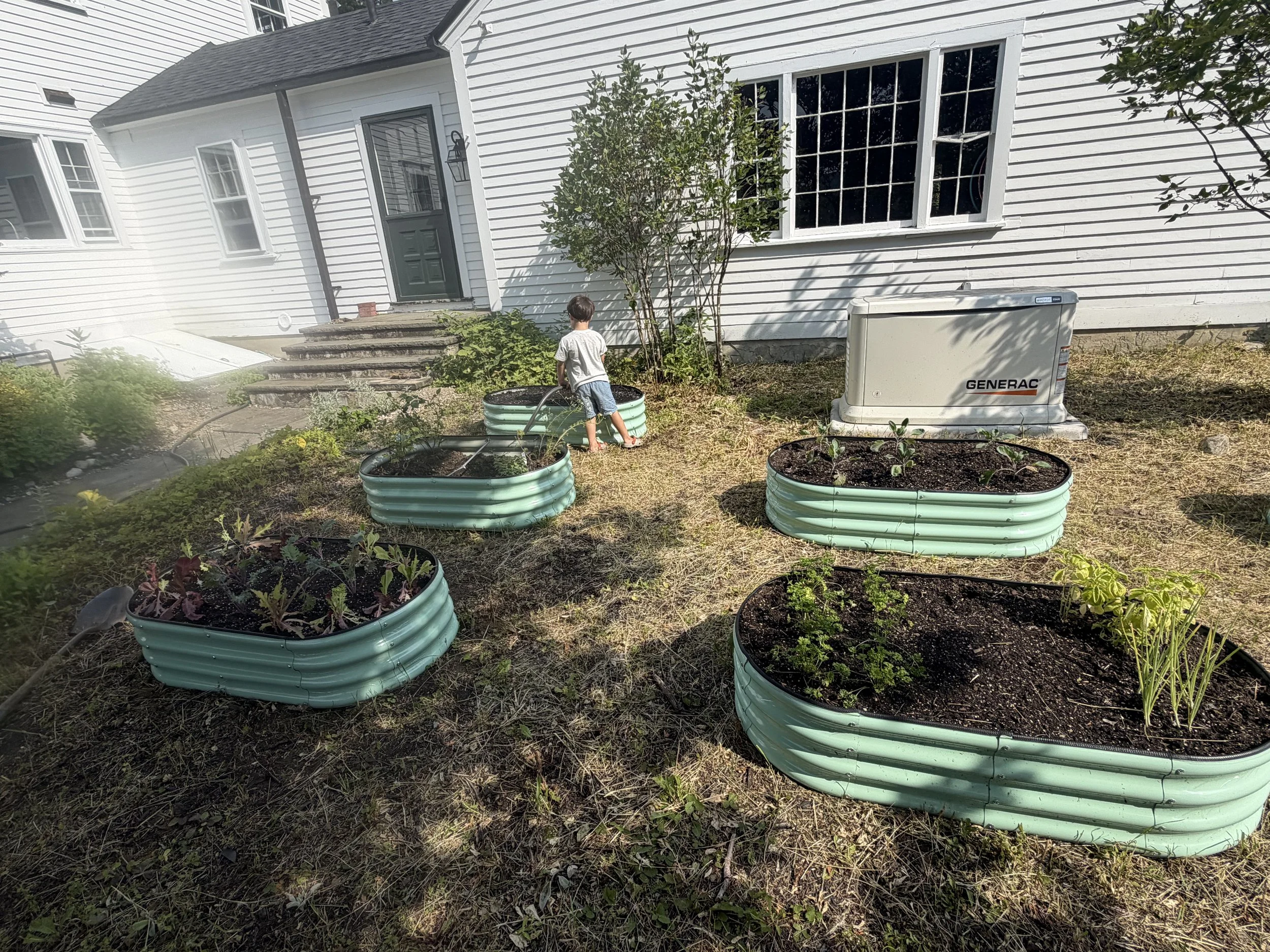
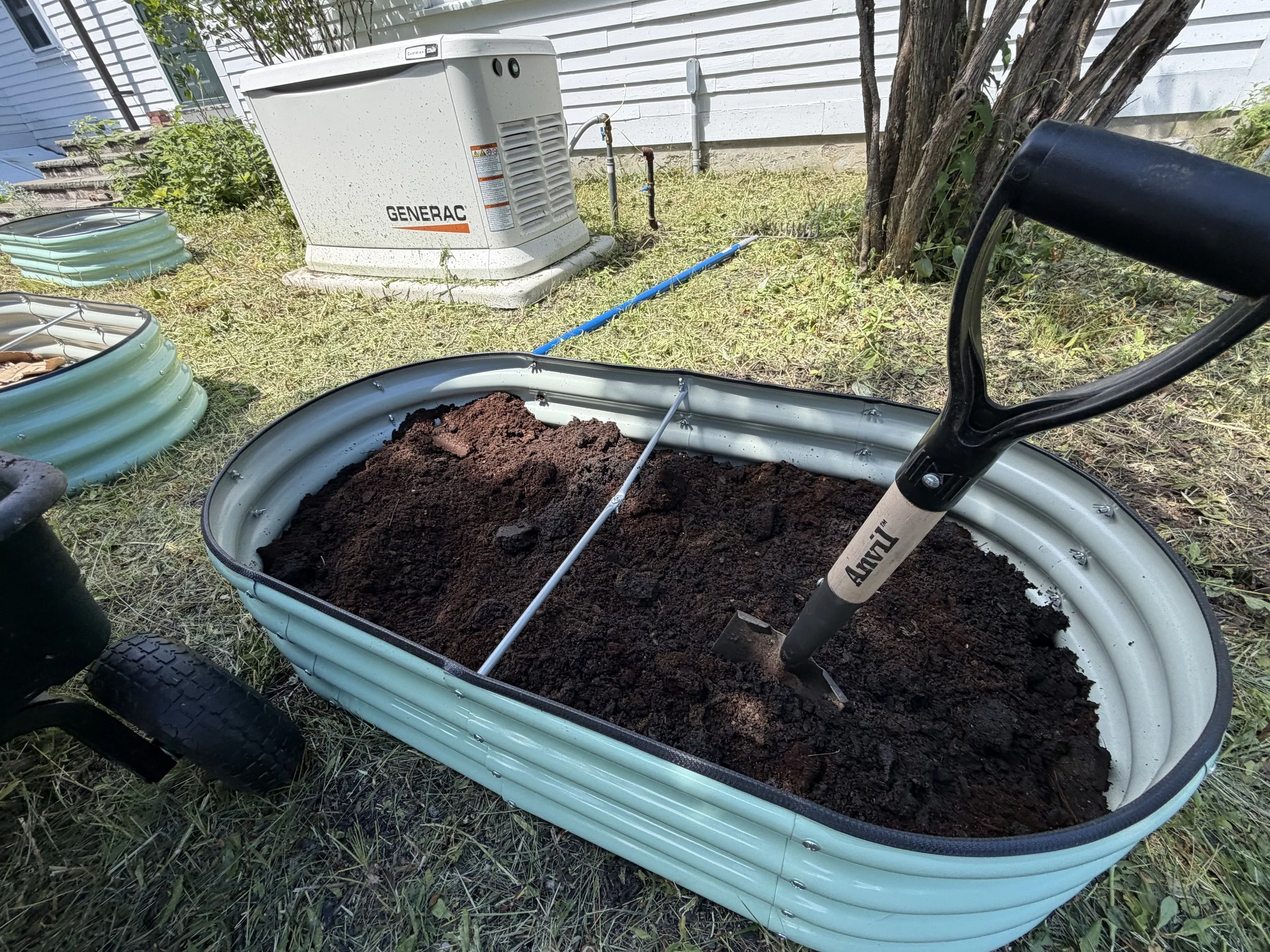
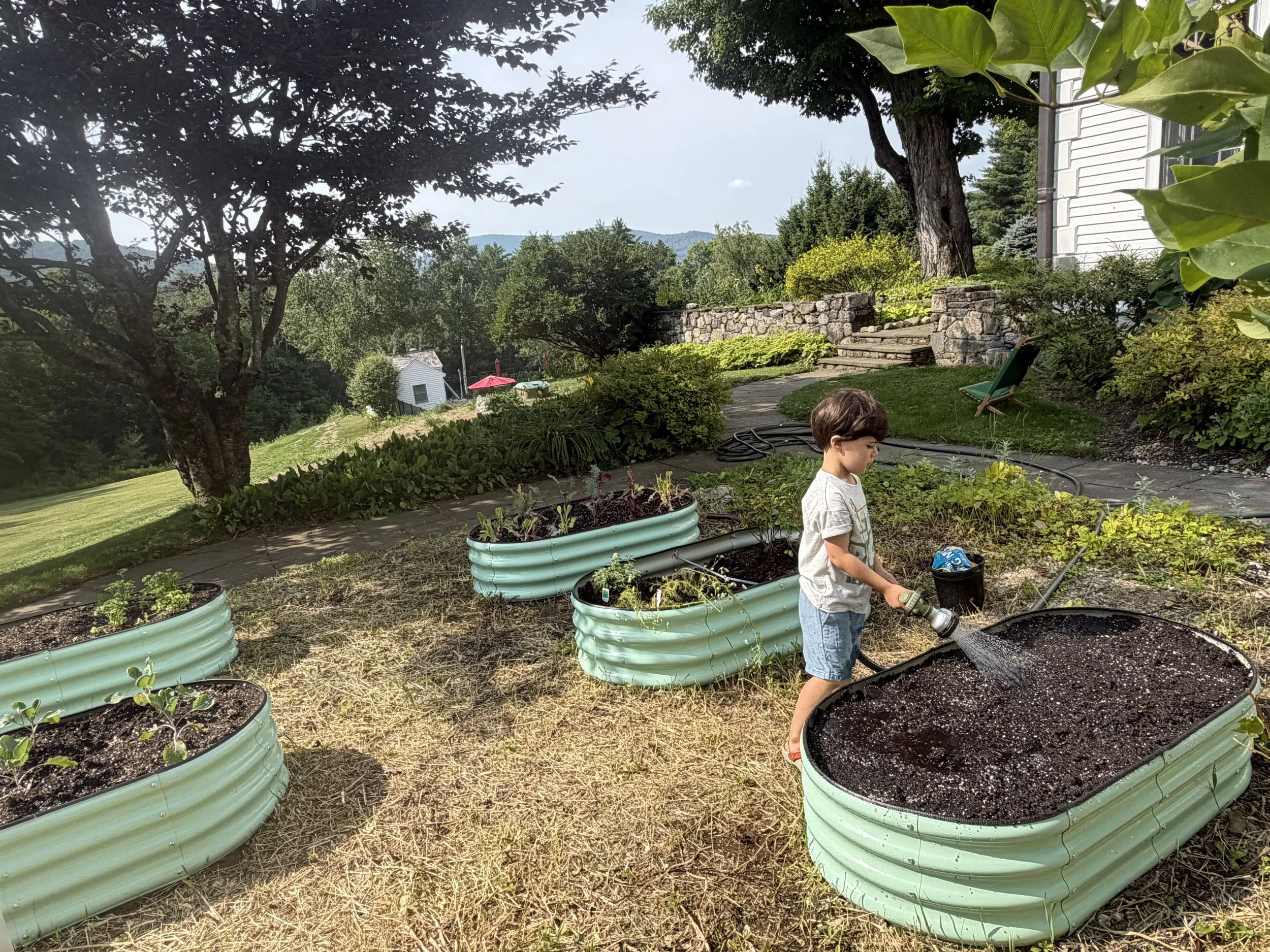
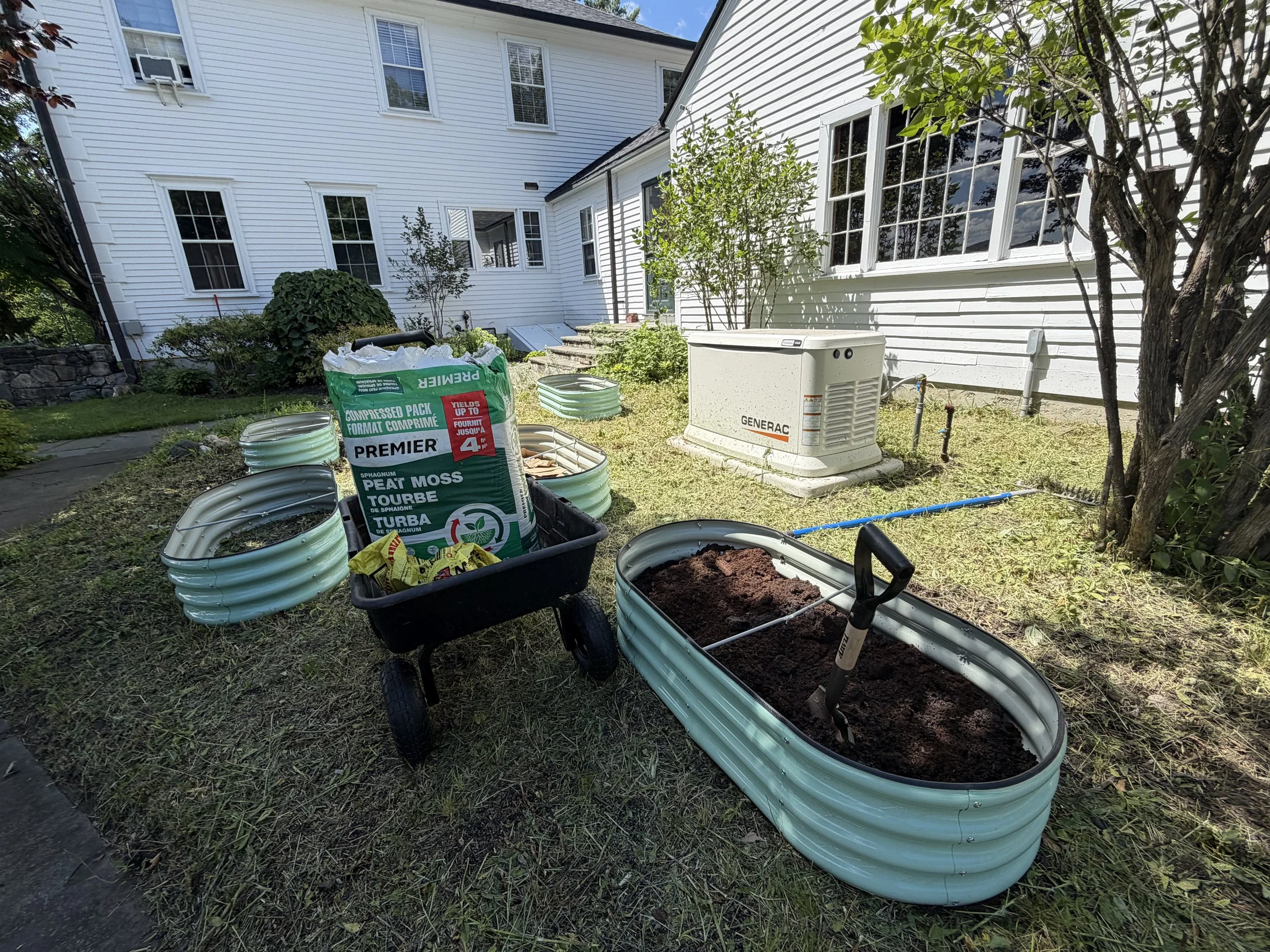
The raised beds themselves are six pale green metal kits from a no-name Chinese brand on Amazon. Not exactly heirloom-quality garden infrastructure, nor will their provenance impress anyone at the farmers market. They were cheap though, and I liked the color.
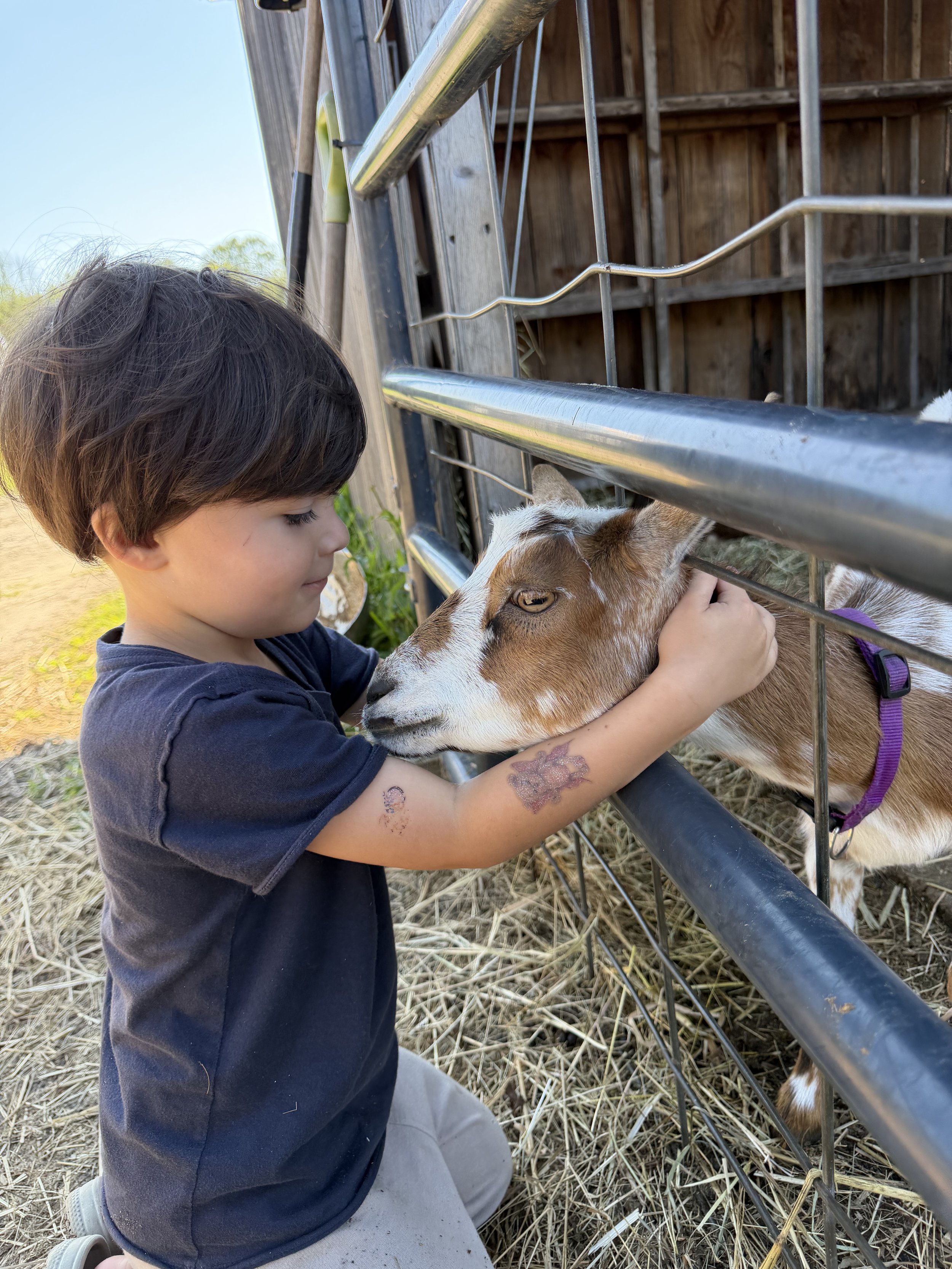
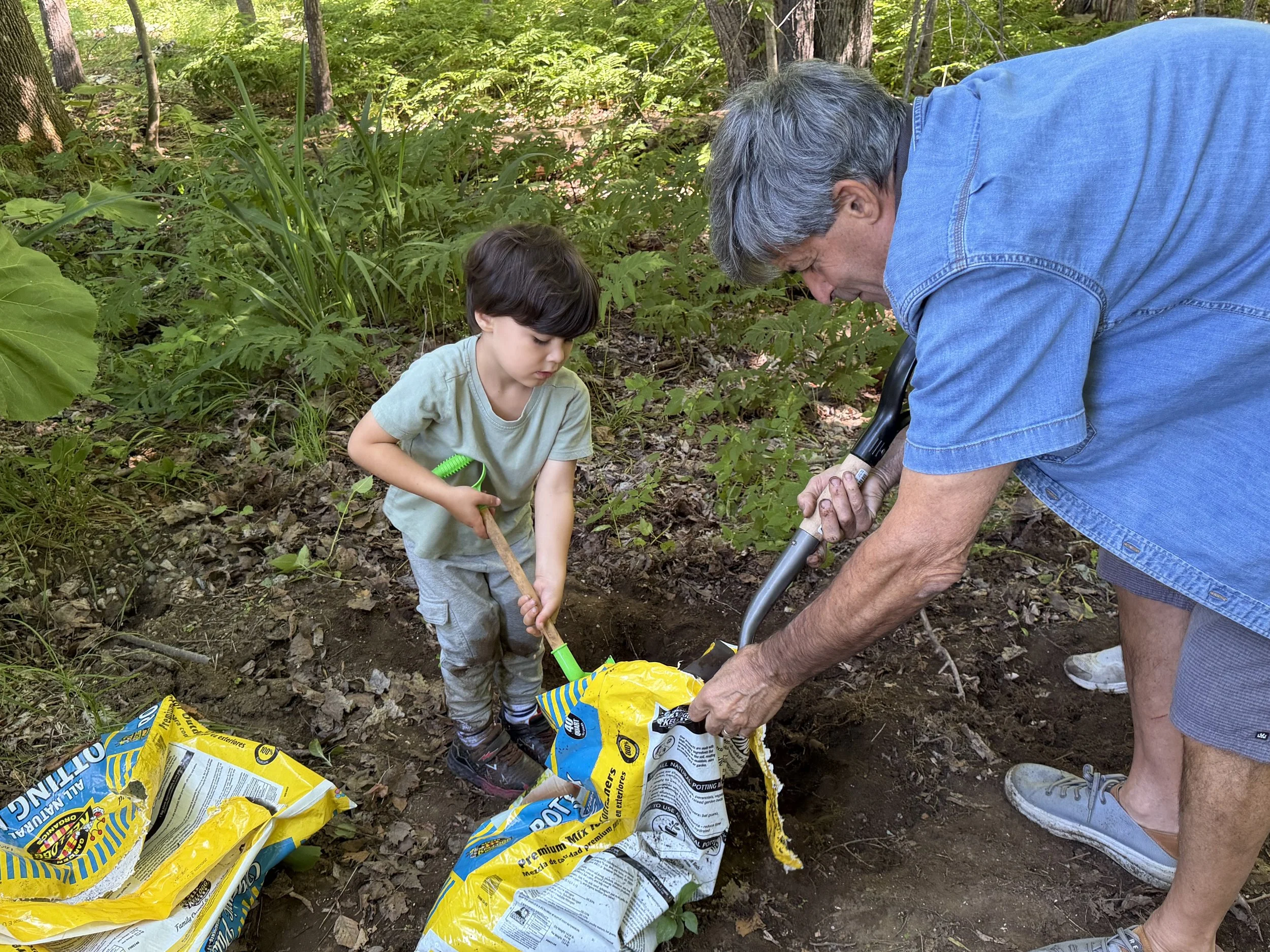
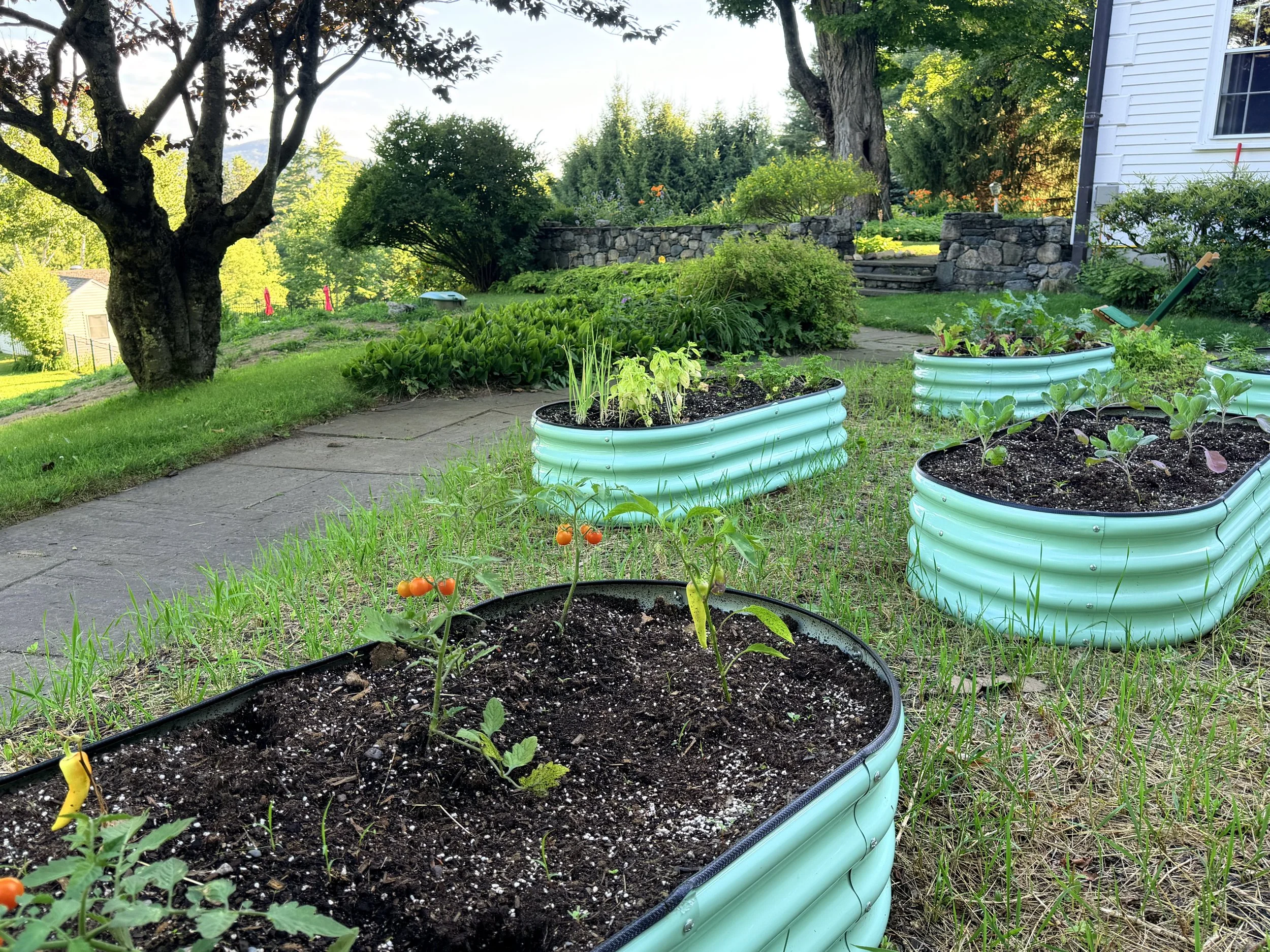
We built them in the living room with some pizza, then after a few Home Depot trips mixed our own soil using local topsoil, manure, peat moss, and potting soil. Then we set and filled the new planters. Henry and Lily helped gather, mix, haul, plant, and water. As with most projects involving children, their contributions ranged from genuinely useful to operationally questionable, but they were fully invested and we had fun. We went to a local nursery and searched for anything that still had a reasonable chance of producing something before the season ended. We came home with Brussels sprouts, parsley, tomatoes, peppers, and several other late-season or fast-growing seedlings.
Not positive that early August is the ideal time for planting in New Hampshire, but we planted them anyway. My hopes are high.
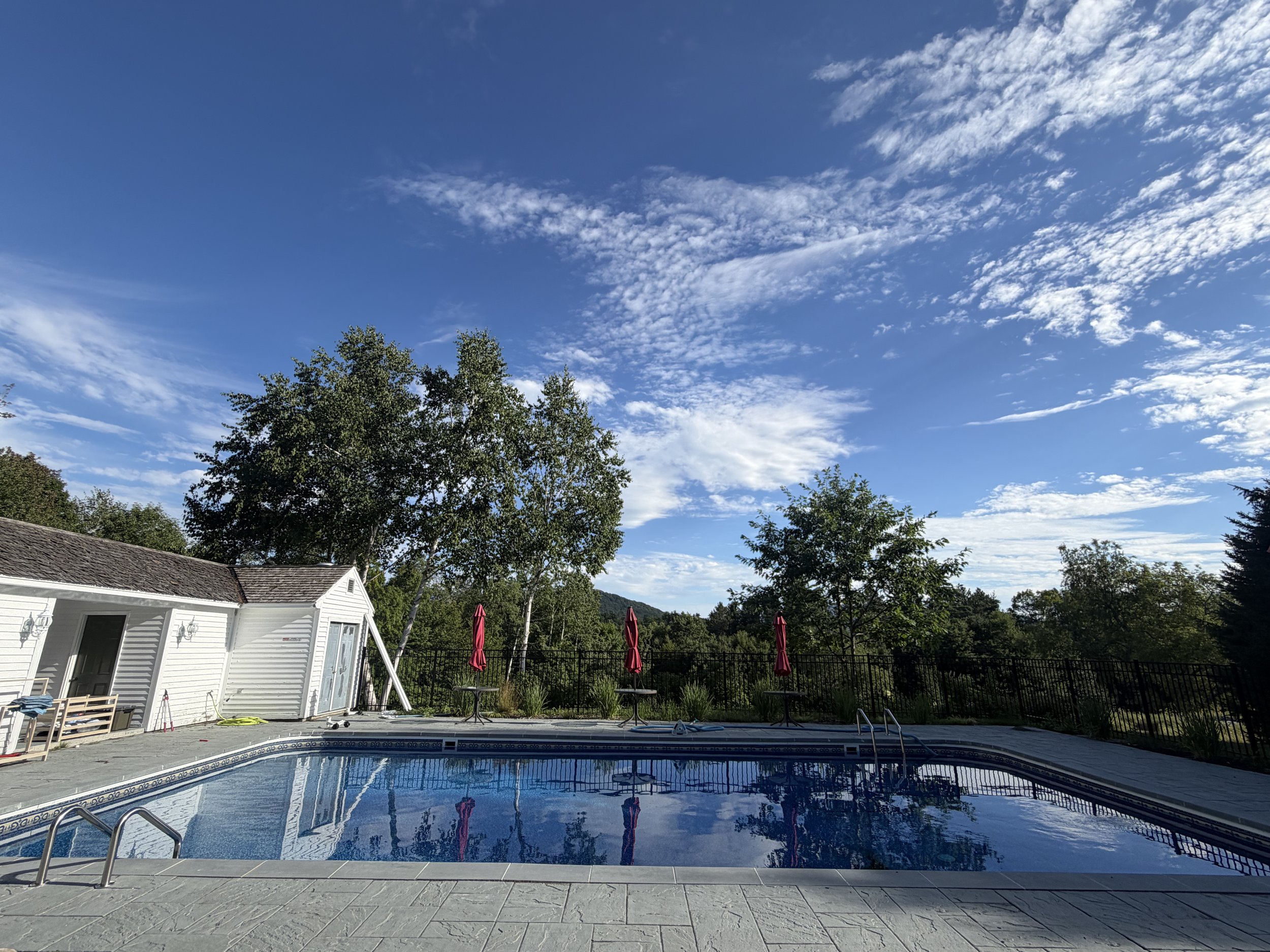
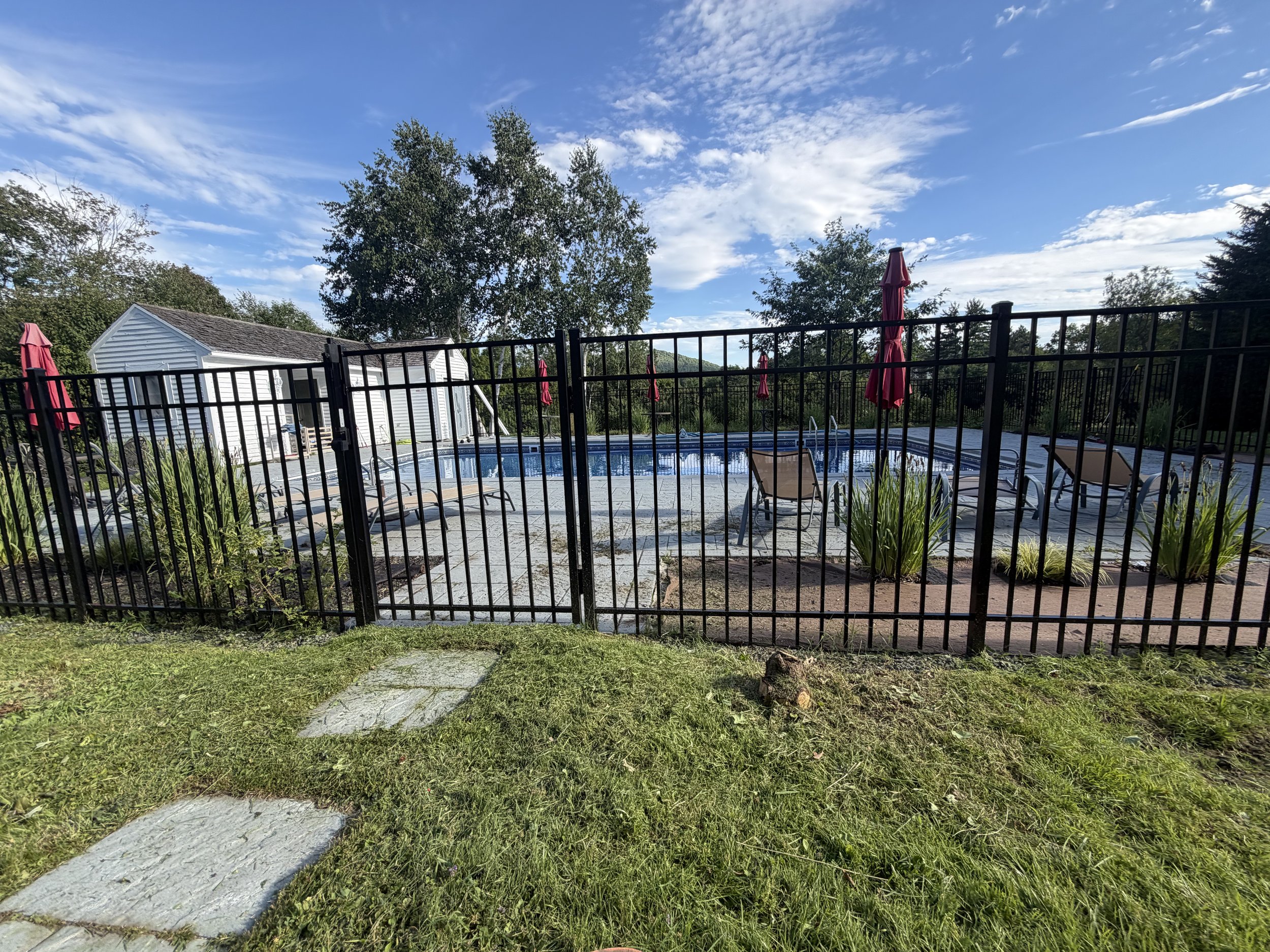
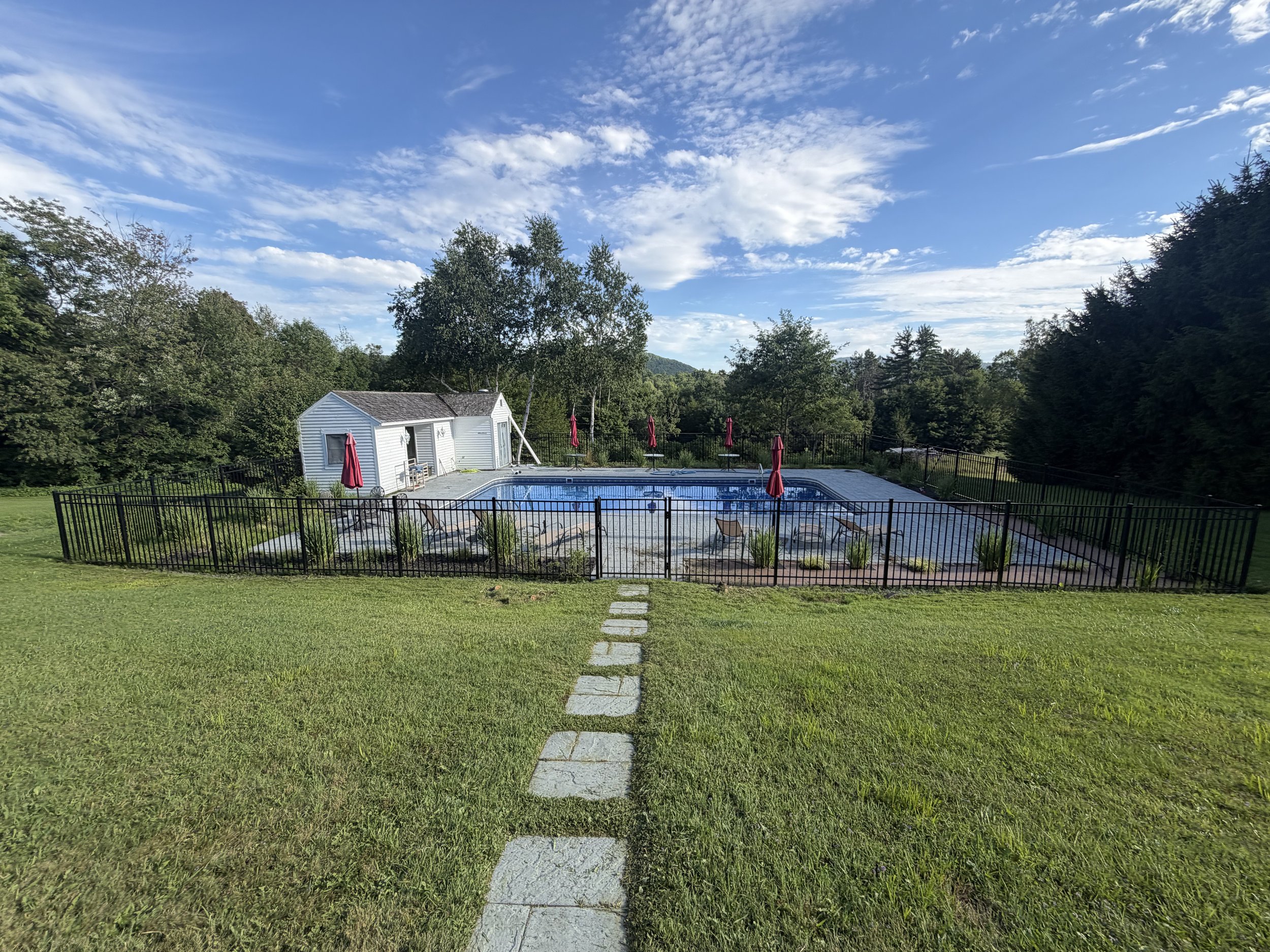
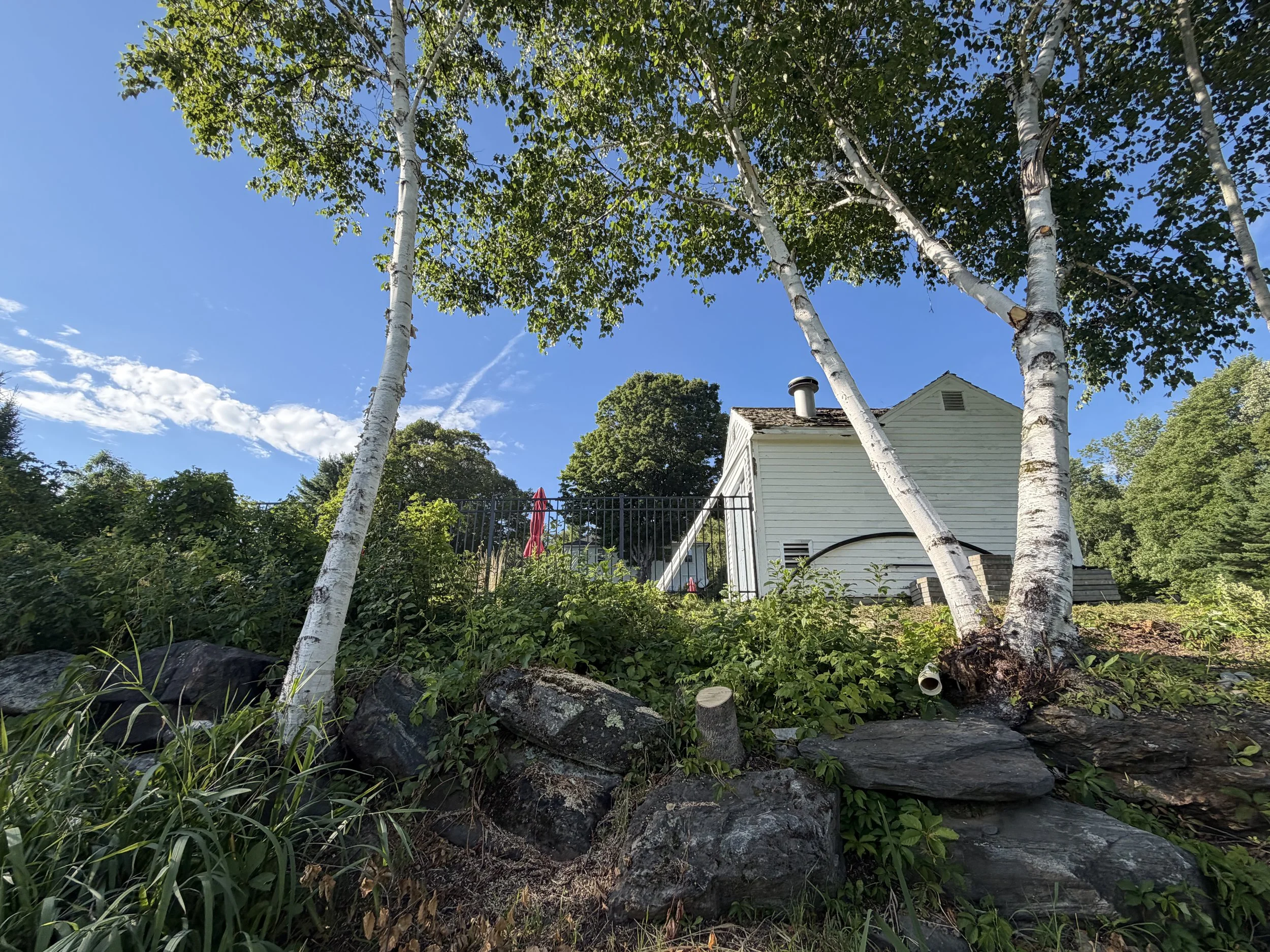
Behind the pool, a collection of scrubby pines, birches, and volunteer trees had been growing directly out of a large retaining wall that holds up the entire pool and pool house area. The trees were never supposed to be there. They had simply been allowed to establish themselves during the years when that entire part of the property received very little attention. Last fall, we worked our way into the area and removed an aggressive invasive vine that had completely overtaken a row of old rose bushes. The roses have responded enthusiastically this year. Freed from the vine, they are flowering again and beginning to reclaim their space.
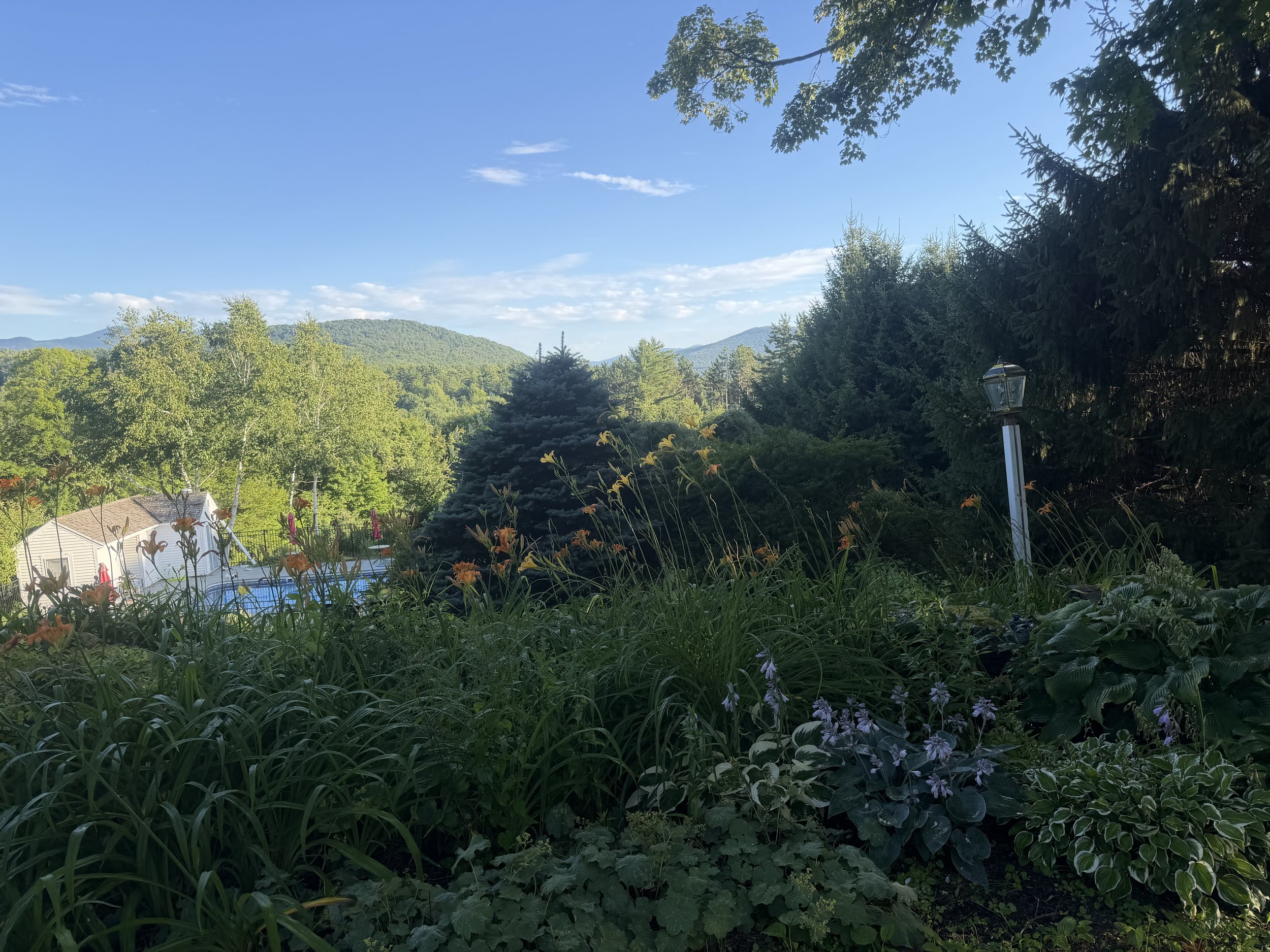
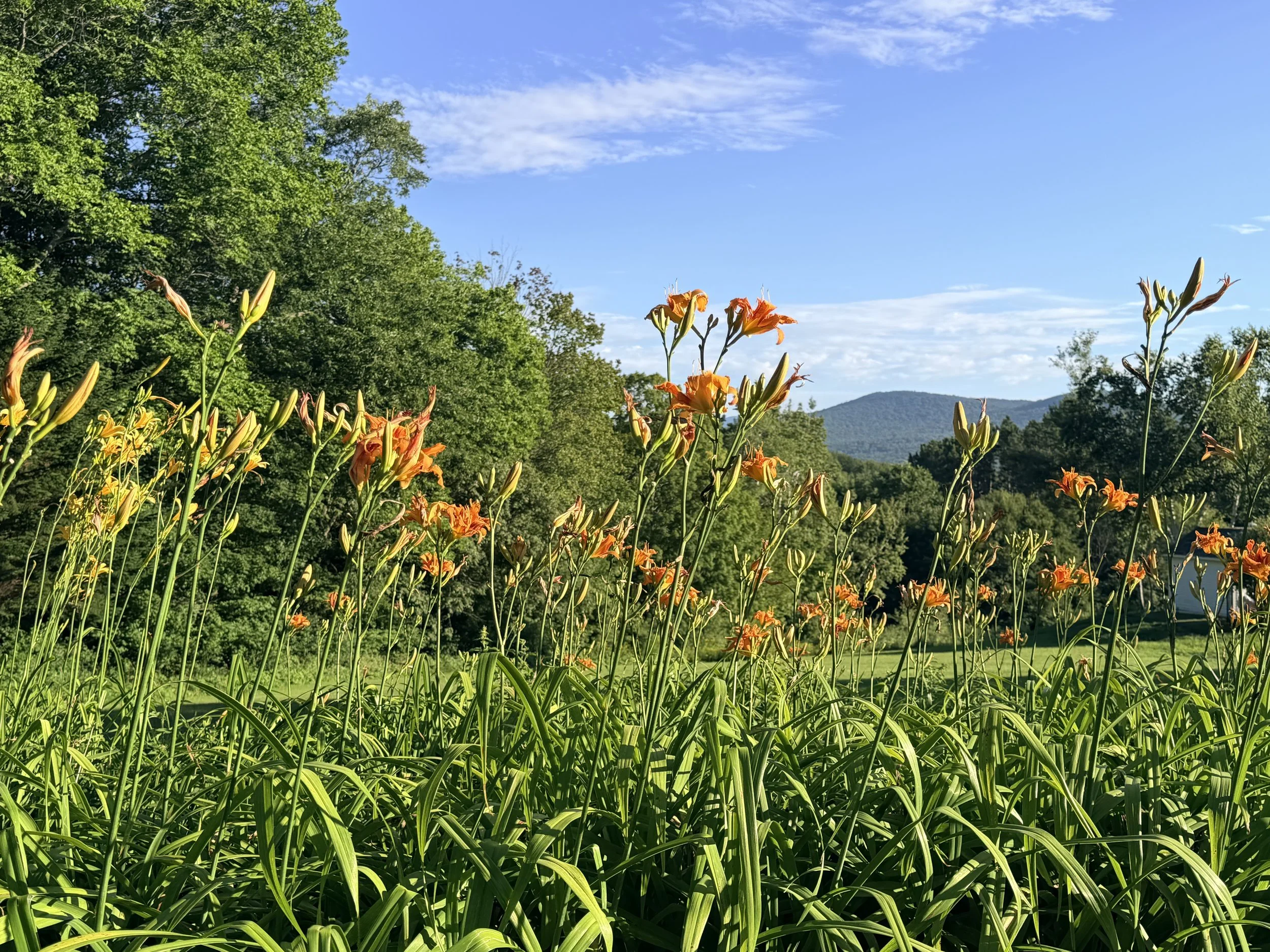
The trees were the next problem. They shaded the roses and blocked what should have been an open view from the pool into the valley below. We do not have one of the coveted dramatic views straight into Franconia Notch that some homes around here have, but we do have rolling hills, a broad valley, and distant ridgelines. It is a less dramatic view, but a good one. So I took the chainsaw behind the pool and thinned those trees. I removed several small trees, limbed up a few others, and cut down two dying pine shrubs near the front of the pool enclosure. I didn’t clear the area completely… the trees still provide privacy and help frame the landscape. There were just too many of them, growing in the wrong places. The difference was more significant than I expected. Considerably more sunlight hits the pool and the roses. The pool area feels lighter. From the water and patio, the hills in the distance are much more visible.
The upper lawn, along the road, remains probably the most difficult part of the property to maintain. Several enormous mature (and in some cases dying) pines shade it nearly all day. They continuously drop acidic needles that take years to break down, while their roots run across and well above the surface of the ground. Some of the roots stand high enough to catch the mower blades.
This lawn is also full of old stumps, volunteer trees, and narrow spaces that are difficult to navigate with a 54-inch mowing deck. Because the house sits downhill from the road, winter plowing continually deposits a seasonal mixture of sand, salt, gravel, and miscellaneous road debris along the edge of this yard, to boot.
It is also the part of the property that everyone sees when they drive past.
This is my deep personal shame.
Across the road is a property that is professionally maintained and always looks exceptionally good. I do not expect to match a renown professional landscaping crew, but it does provide a fairly unforgiving point of comparison.
This week, taking advantage of some holes in my schedule and the ongoing good weather, I began to tackle regrading the upper lawn. I used the chainsaw where I could, but the old stumps were surrounded by dirt and stone. Running a chain through soil is an excellent way to turn a sharp chainsaw into a butter knife, so I switched to a flathead axe. Being relatively new to country life, I’m still not positive about whether this was a reasonable decision, or whether there is a better tool for the job. It’s what I used, nonetheless. I wanted the stumps gone, I did not want to destroy a chain, and swinging an axe for a few hours technically counts as exercise.
It took time and a fair amount of sweat, but I eventually cut all of the remaining wood below ground level. The mower can now pass over the area without taking it off-roading, and I should be able to get a relatively clean and even cut (of what little grass there is).
While I was there, I also removed several saplings, cut back the roadside hedges around the mailbox, and re-graded a berm that had formed along one section of the road from winter plowing. The soil up top is mostly sand, gravel, and salt, so grass may be an optimistic expectation. I may spread topsoil and seed it anyway. The worst likely outcome is that the roadside continues looking approximately as bad as it already does.
The exposed pine roots are a larger problem and will require a more thoughtful solution. I need to improve the grade without burying the roots deeply enough to harm the trees. That one, though, is going to have to wait.
The final project of the week was the most fun. Lily and Rachel has chosen a tree in the lower field for a future treehouse, a task we originally assigned them shorty after moving here about a year ago. My dad texted her an image of an elaborate treehouse and she fell in love with the design.
Construction is unlikely to begin this season, but it is a realistic project for next summer.
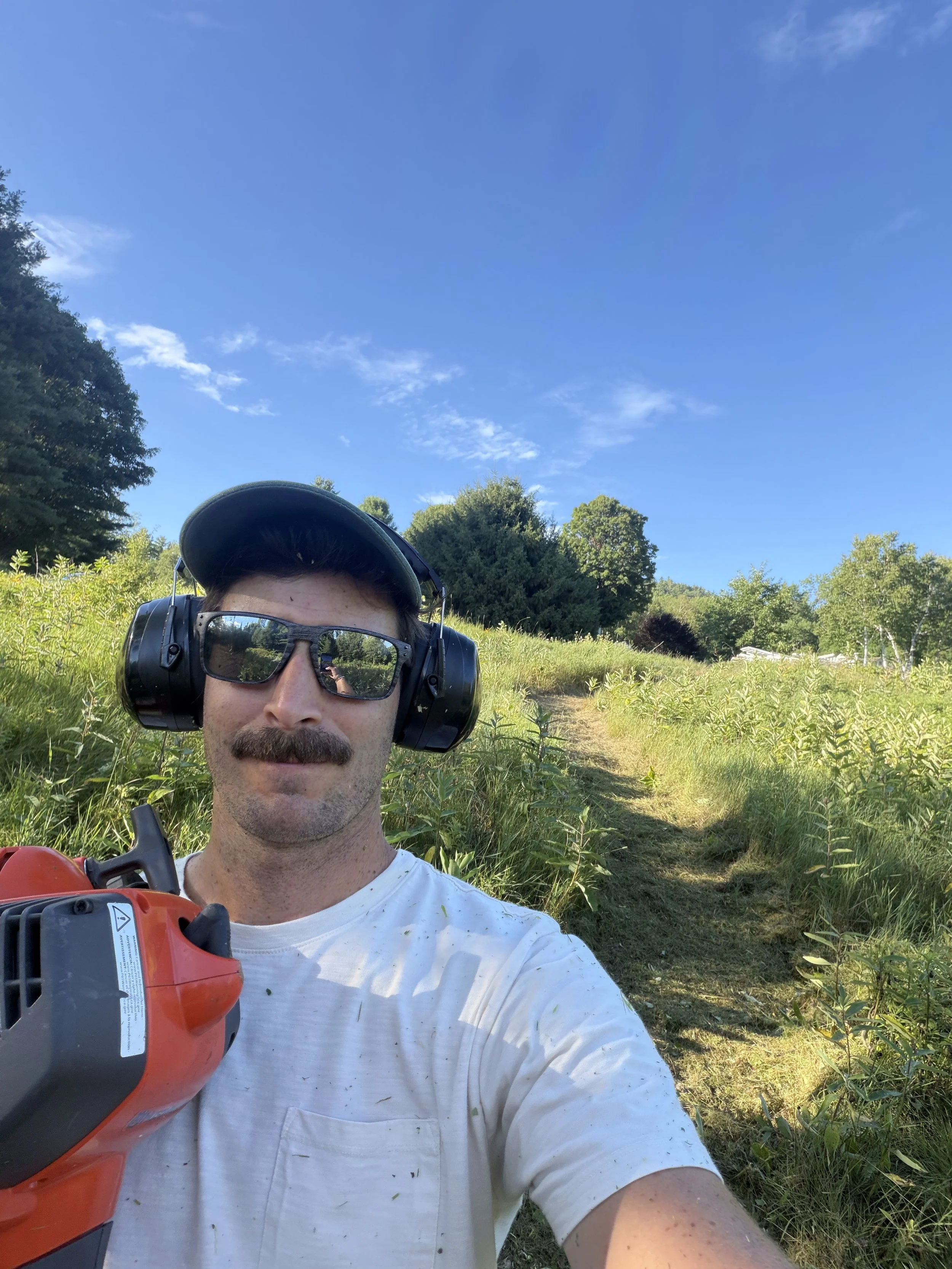
For now, the field between the house and the tree had grown high enough that reaching it meant pushing through shoulder-high grass, milkweed, and brush. And ticks. I took the weed trimmer down and cut a narrow path. Just cutting that path took almost two full thanks of gas. I probably need to get a larger trimmer if I’m going to keep doing this kind of stuff… I bought the current tool for edging my suburban yard in Florida.
The pool view is not dramatically different, but feels a little more open. The upper lawn is not beautiful or full of grass yet, but it is easier to mow and will grow in over time. The garden may have gone in too late, but it exists now and will be there to plant next spring. The treehouse has not been built, but there is now a path to the tree.
Not bad.