Husqvarna 128LD String Trimmer
A light-duty, lightweight trimmer that Just Won’t Quit.
Summary
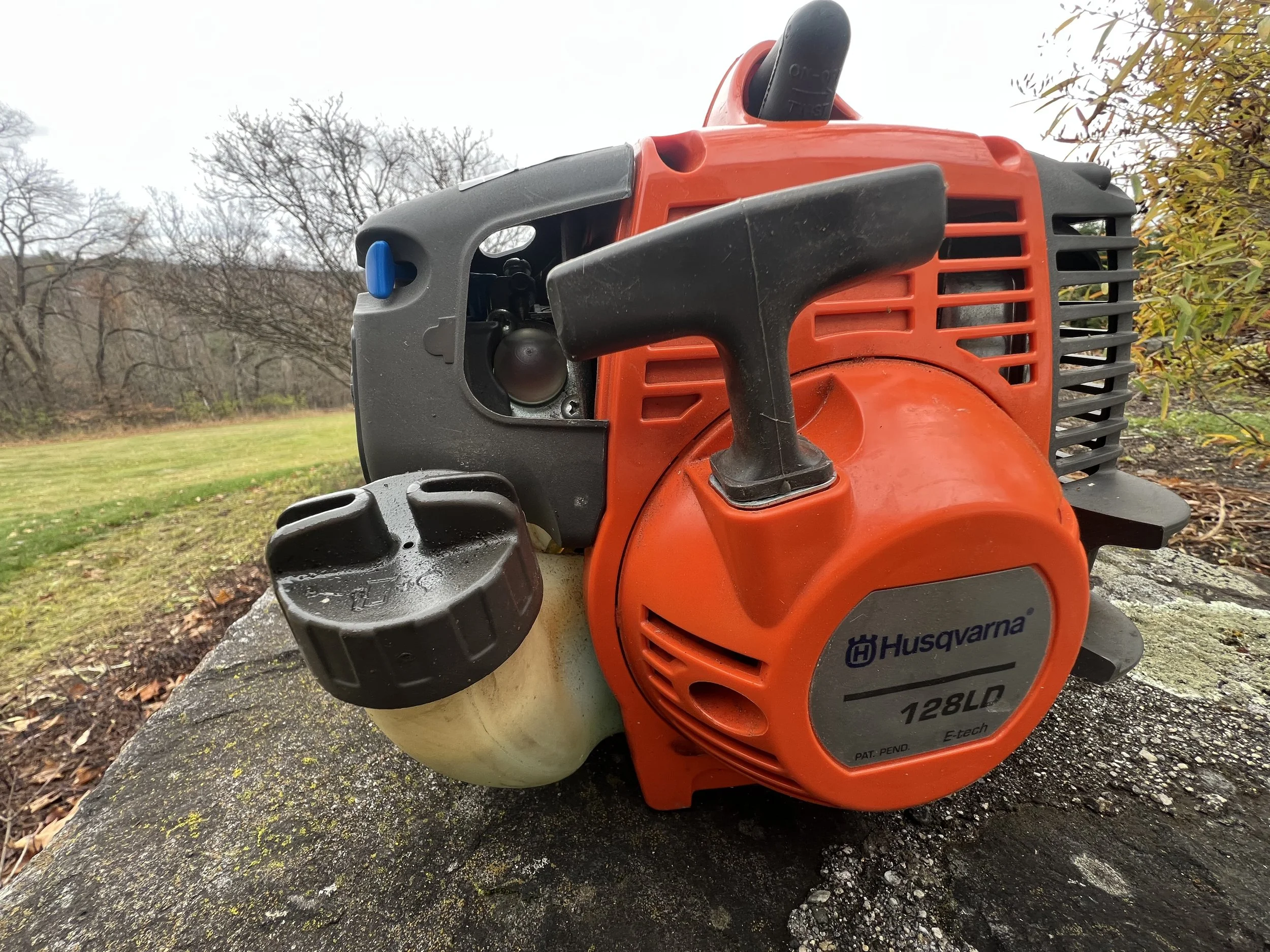
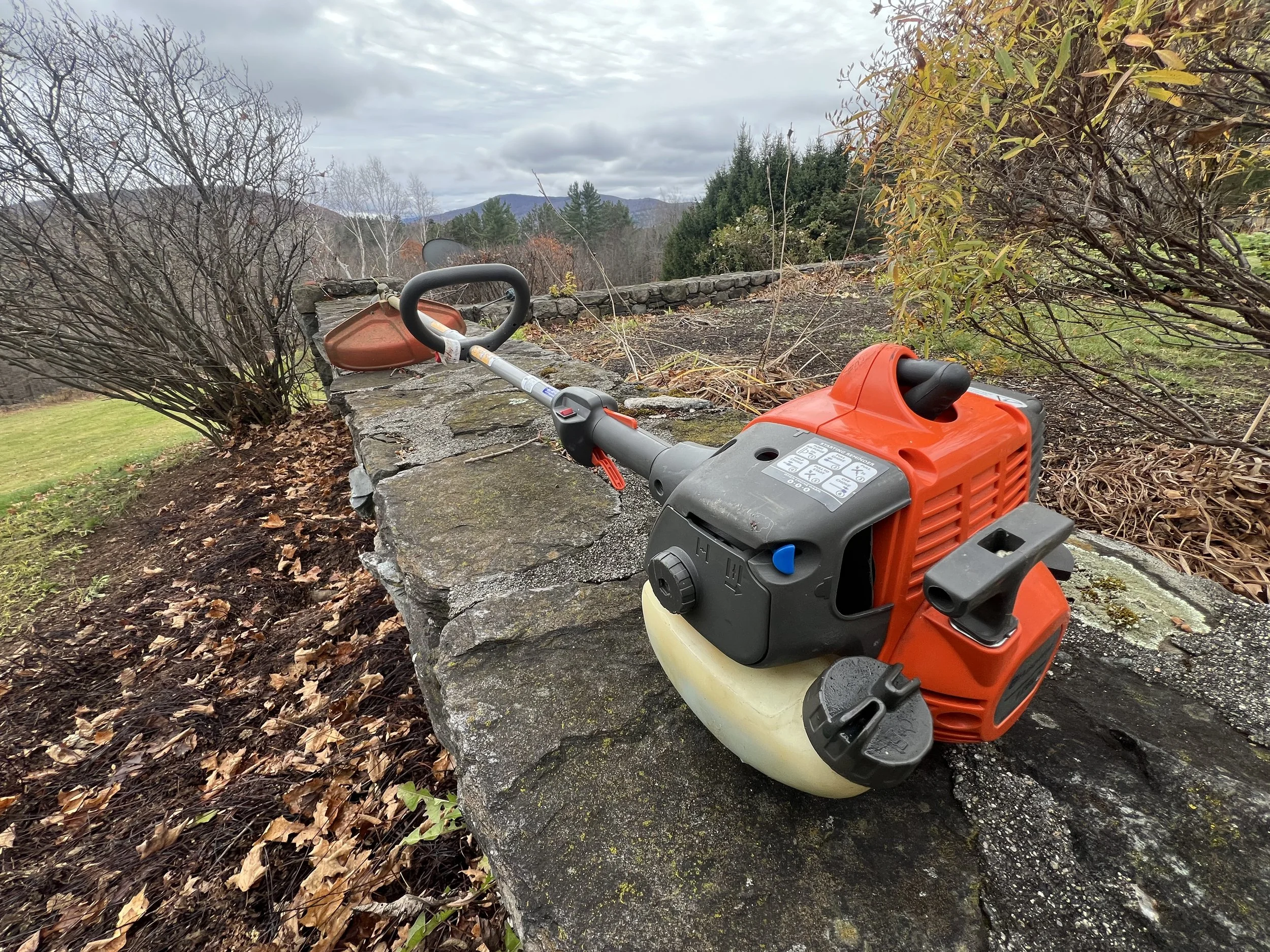
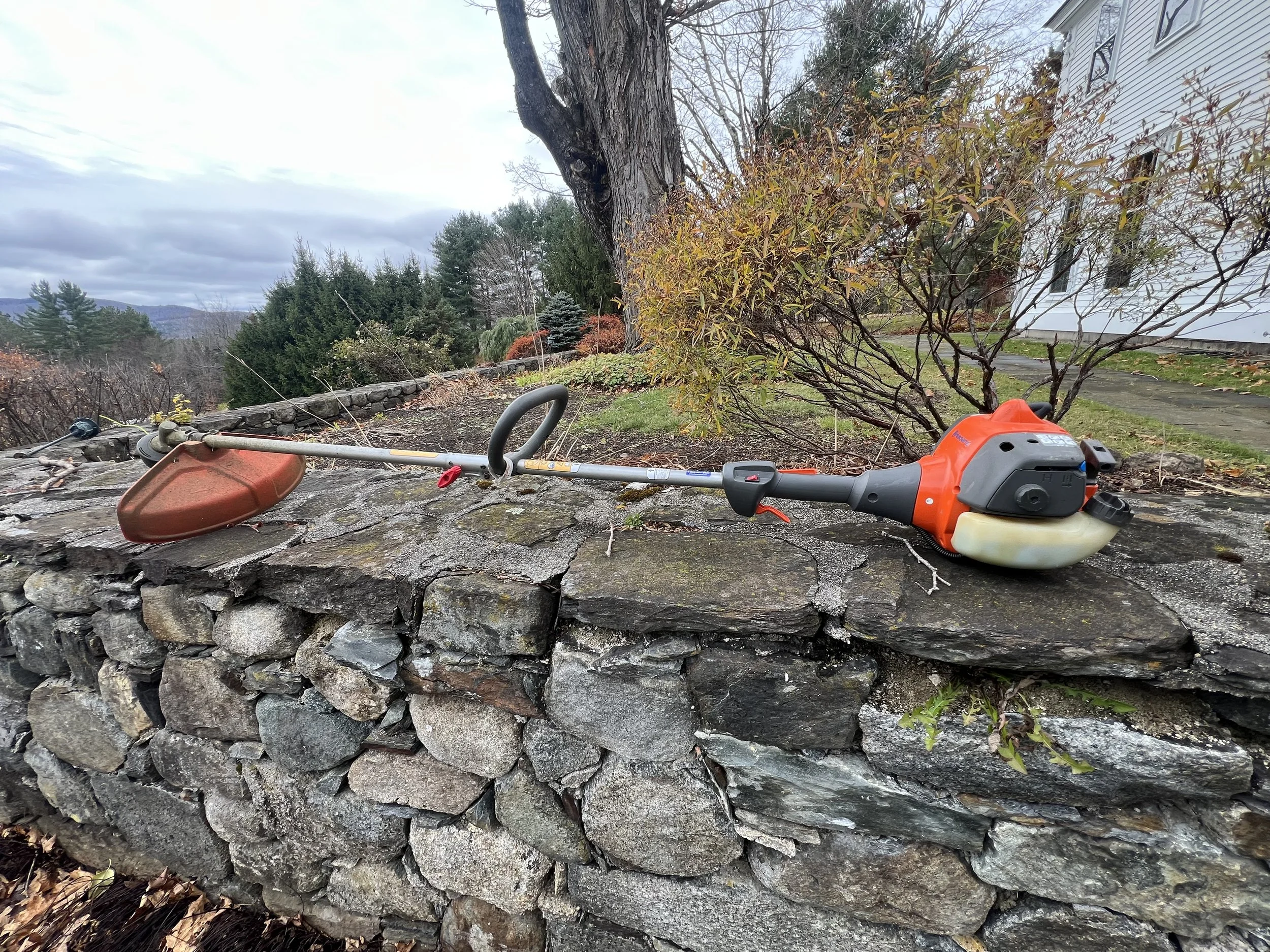
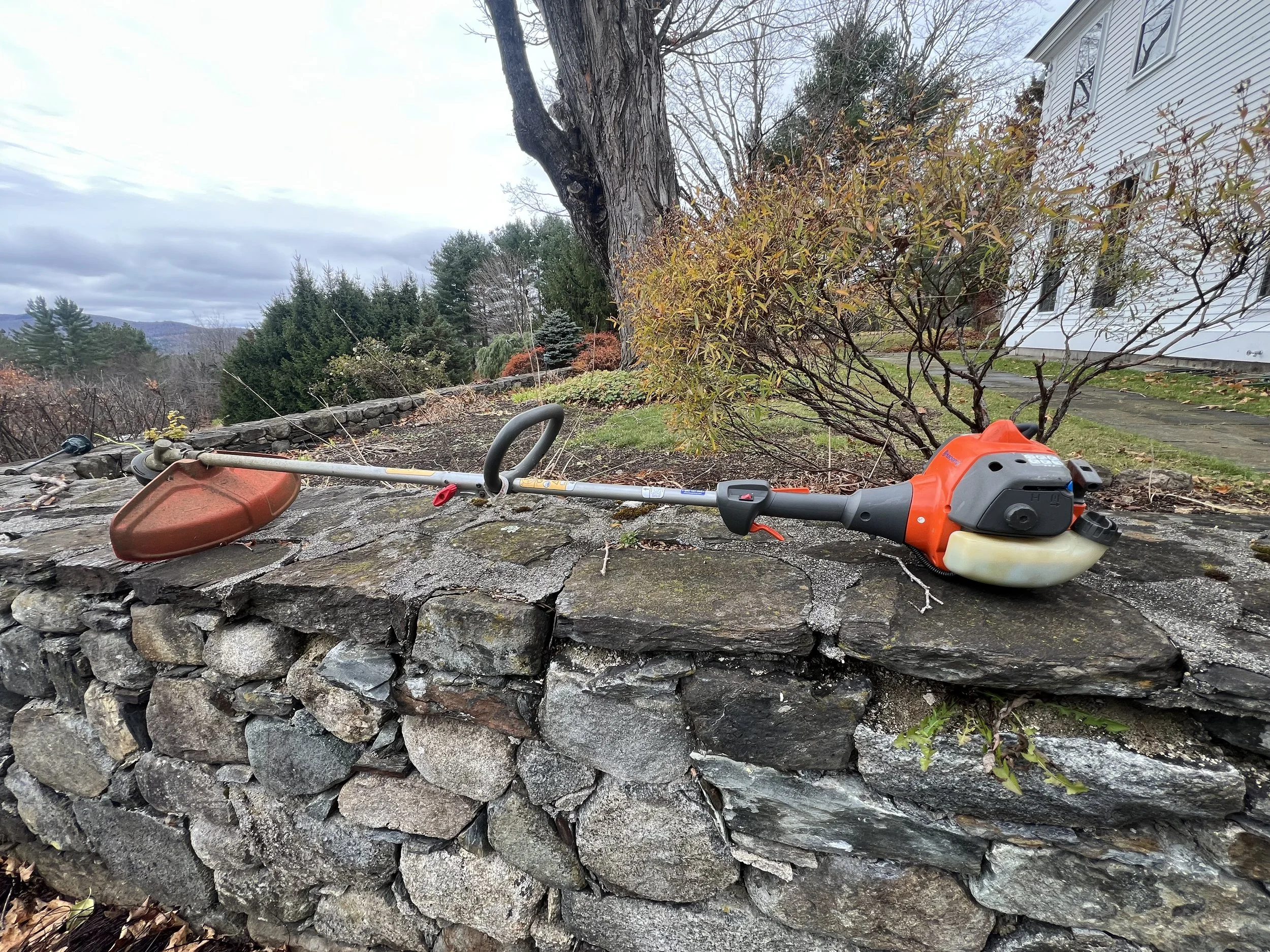
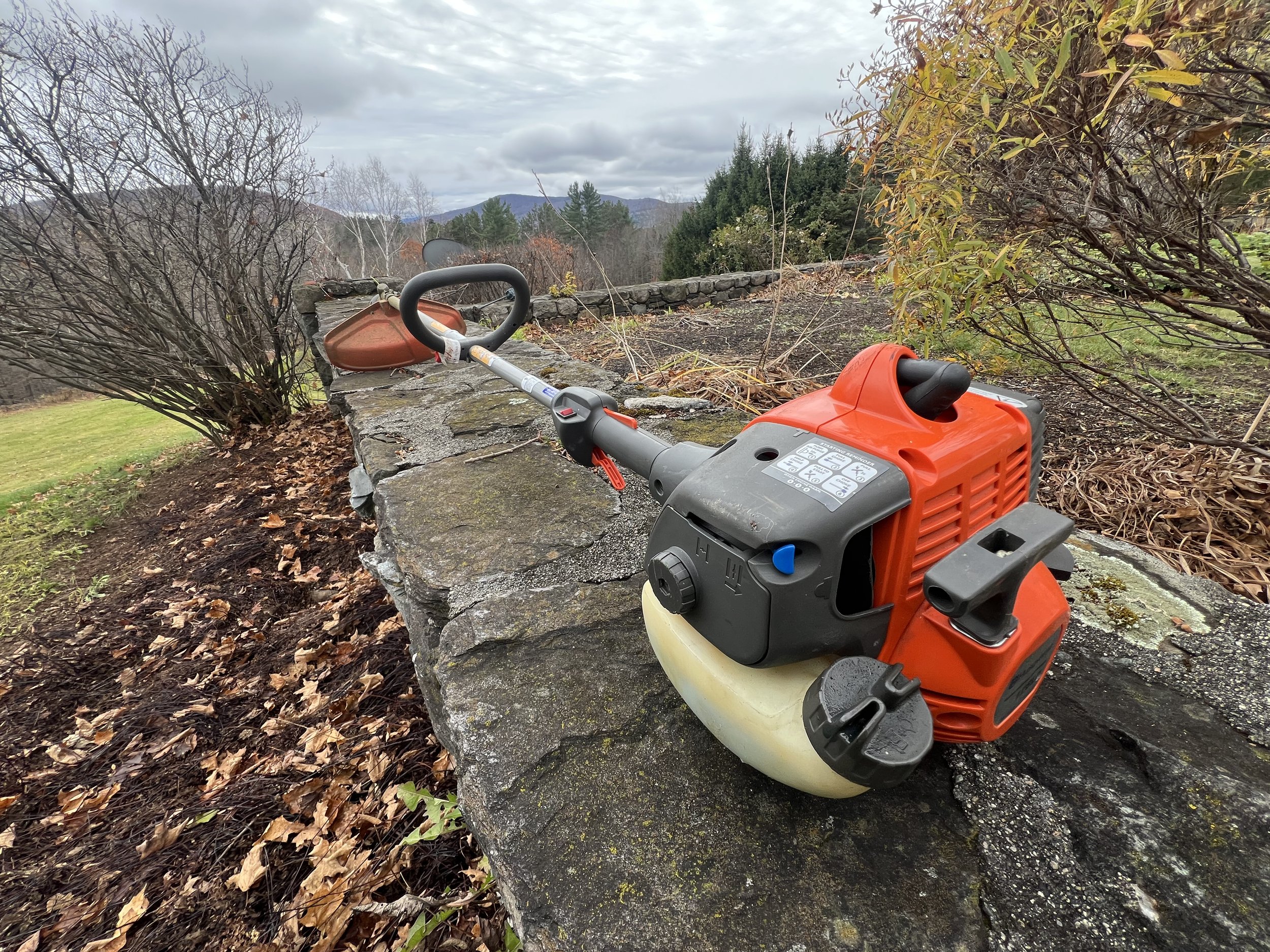
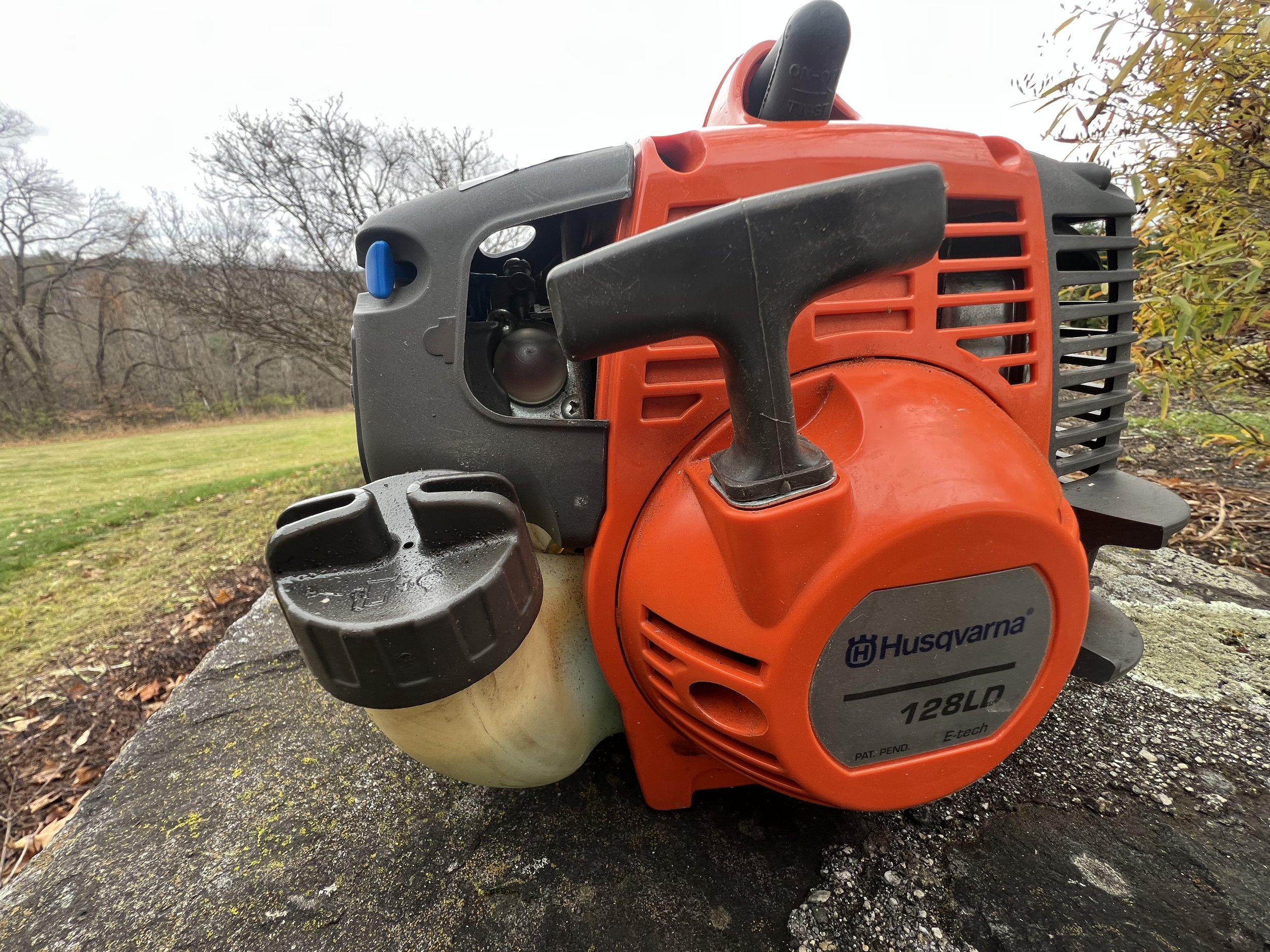
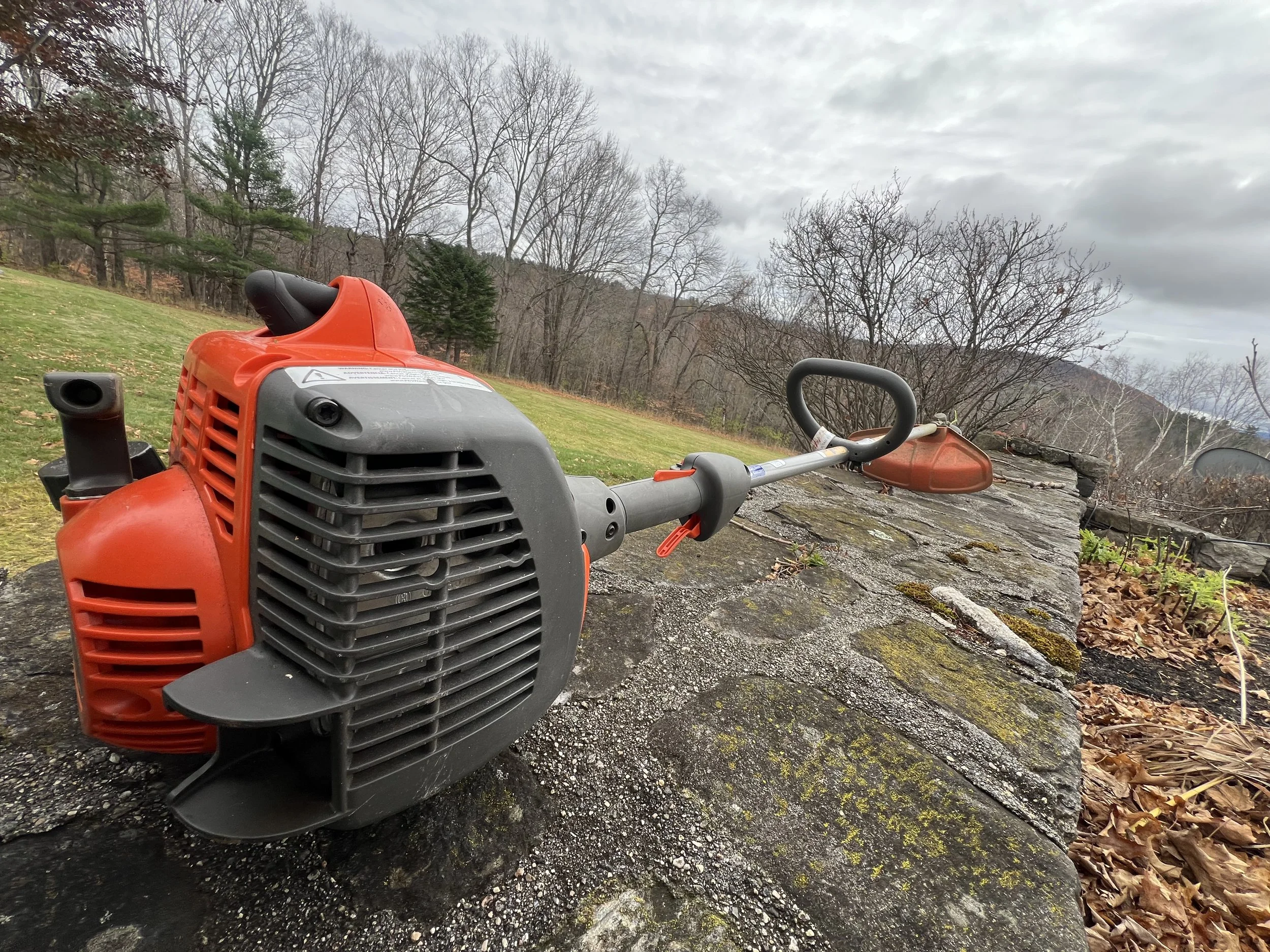
The 128LD is about as simple as a two-stroke trimmer gets: 28cc engine, 1.0 horsepower, and a 17-inch cutting width. It weighs in at just under 11 pounds, and you feel every bit of that in the best way — light, maneuverable, almost delicate. The detachable straight shaft and quick-connect coupler are designed for multi-tool use, though I’ve stuck to the standard trimmer head. The engine housing is compact and well-balanced, with that familiar Husqvarna orange-and-gray finish that manages to look both professional and approachable.
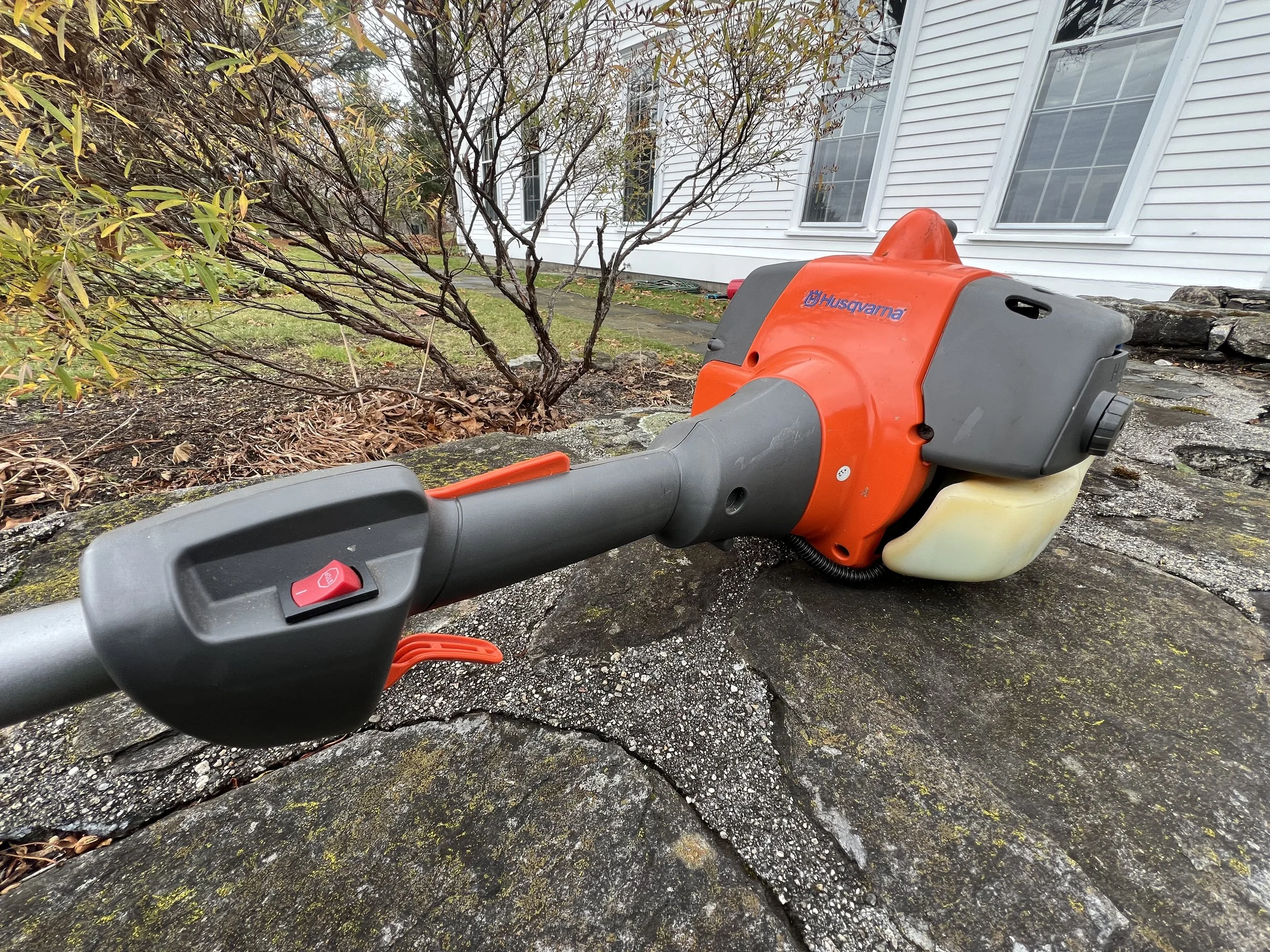
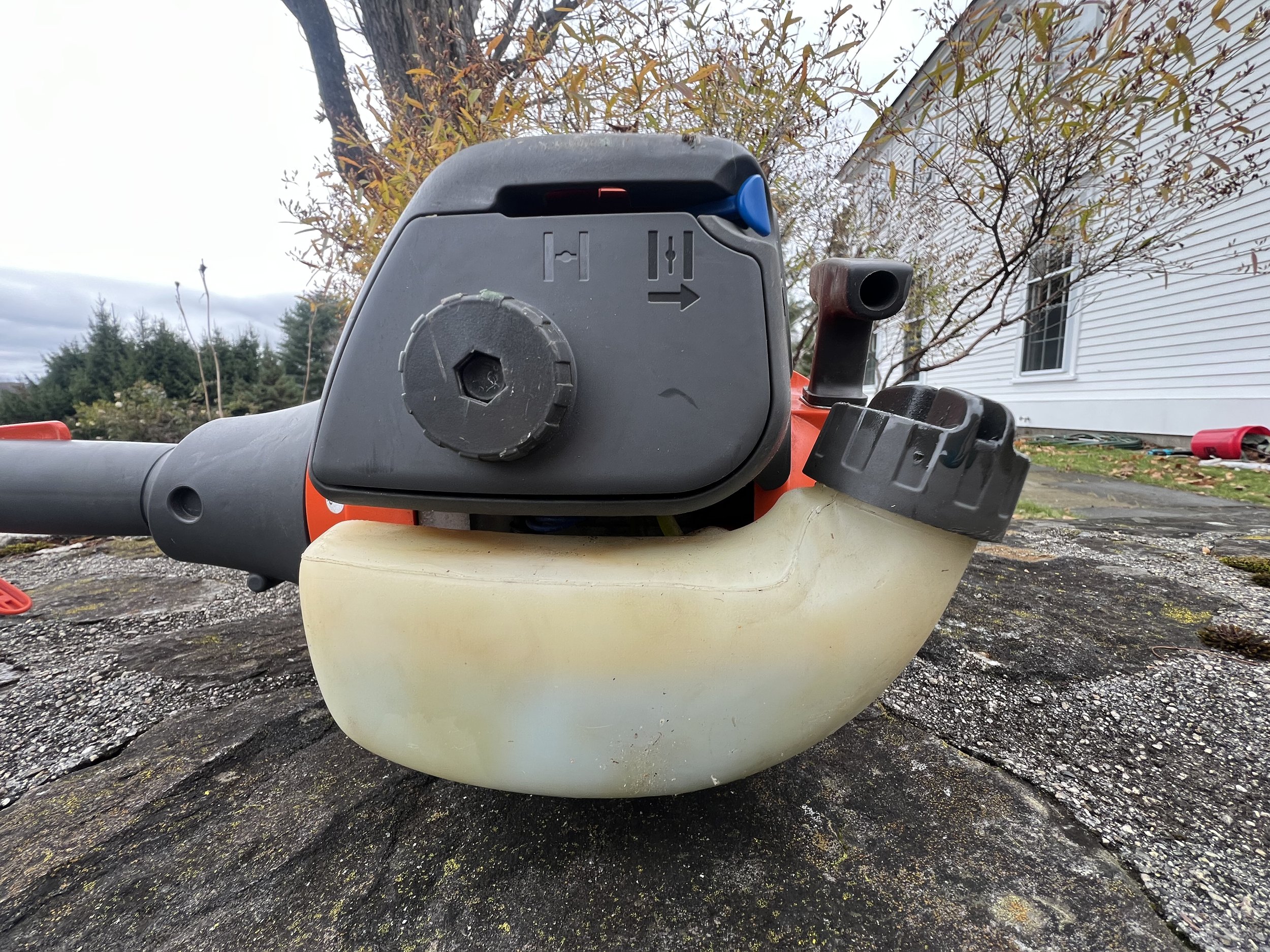
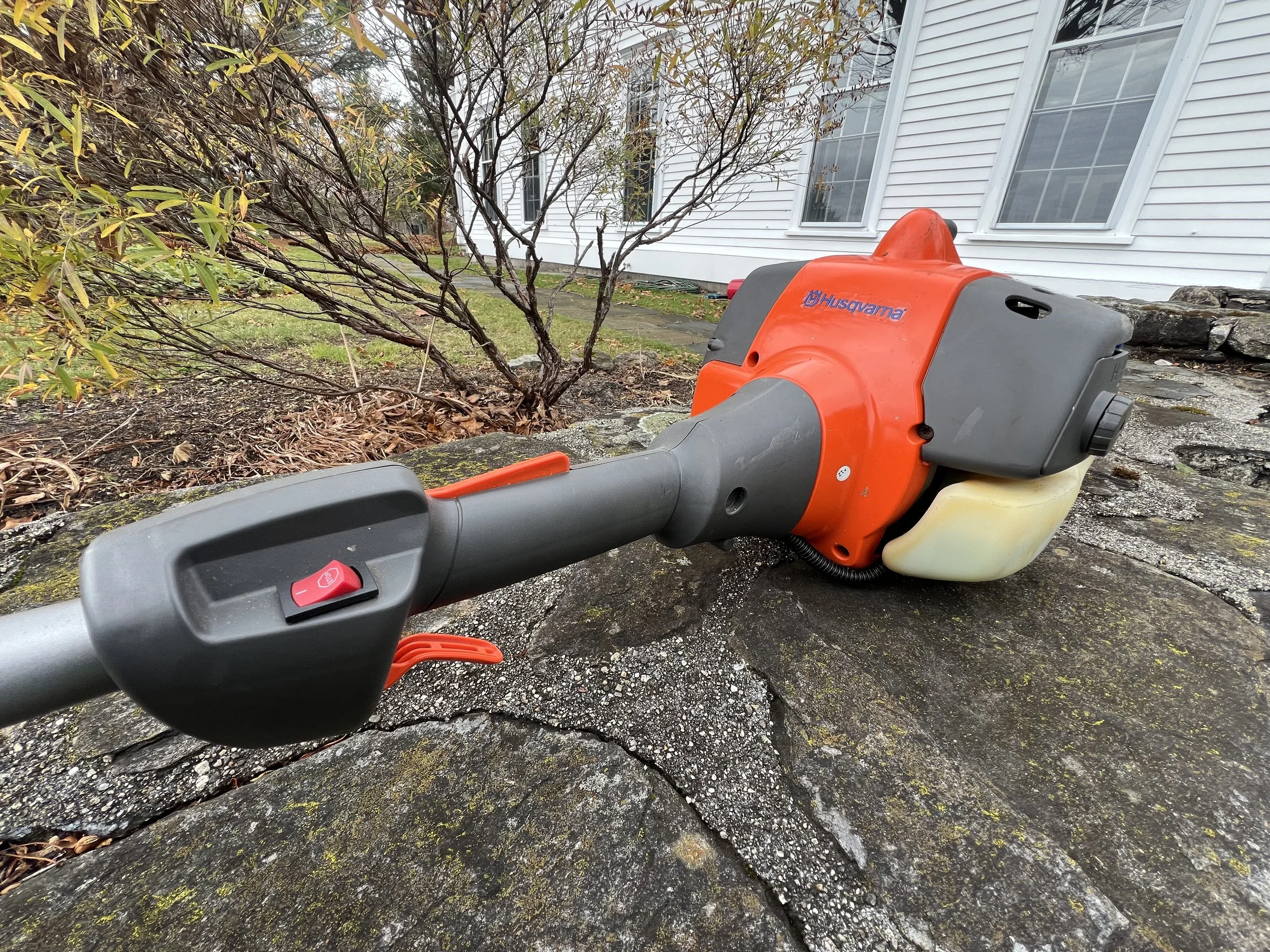
The ergonomics are classic Husqvarna. The handle sits exactly where your hand wants it, and the throttle trigger has just enough resistance to prevent fatigue during long runs. The primer bulb and choke lever are labeled, easy to find, and easy to operate. It’s an approachable machine. You can tell that it was built for homeowners, not commercial crews, but it doesn’t feel cheap — it feels intentional.
In Florida, the 128LD’s world was predictable — manicured lawns, fence lines, mulch beds, and maybe a bit of overgrown grass after a week of rain. It was a pleasure to use in that context: light, smooth, and completely reliable.
Here in New Hampshire, the demands are another story entirely. The 128LD has taken on wild roses with half-inch stems, shoulder-high field grass, and stubborn brush that hasn’t seen a blade in years. I’ve used it to reclaim a quarter acre of overgrowth, pushing it to the edge of its intended capacity and then just a little further.
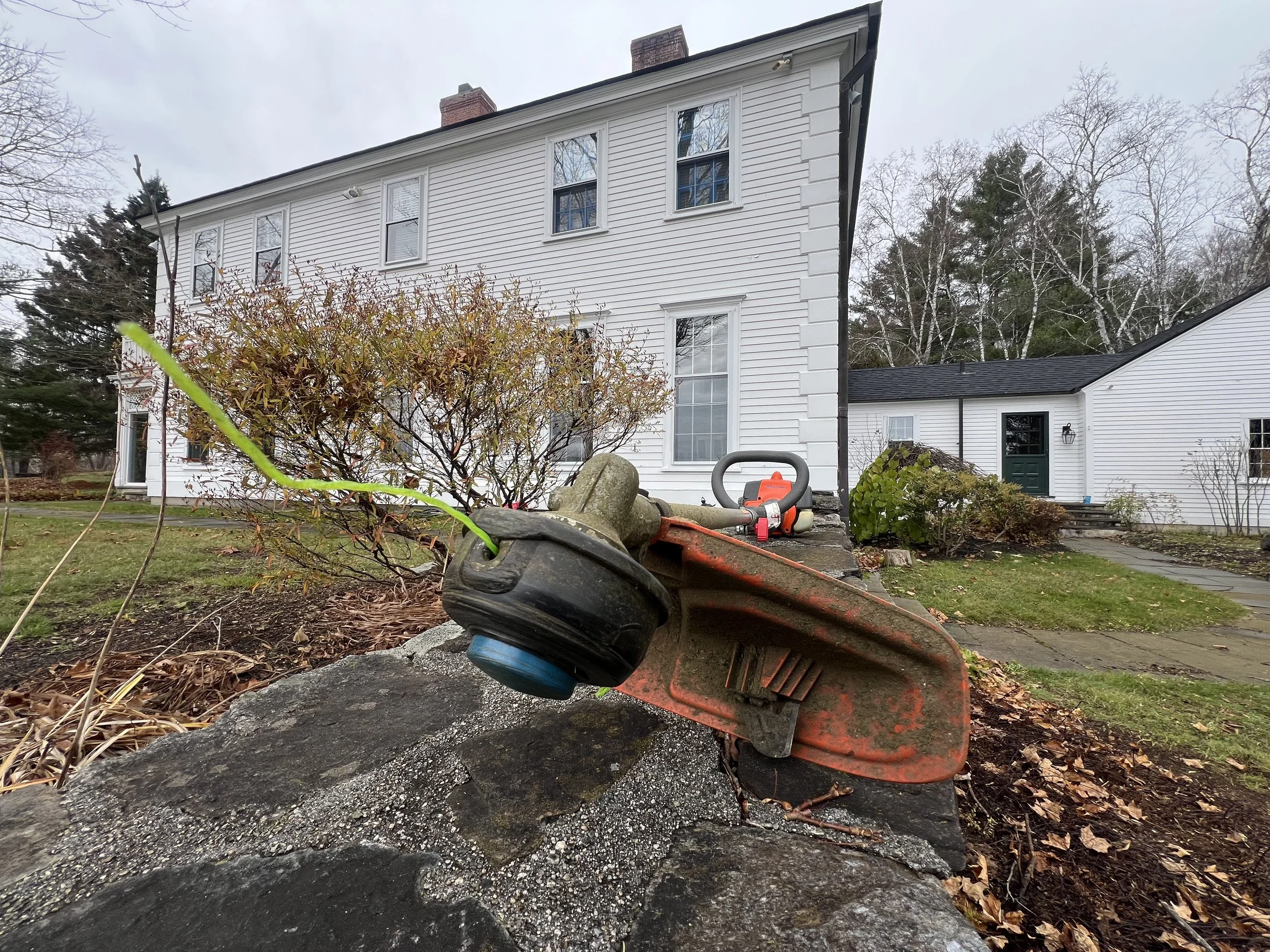
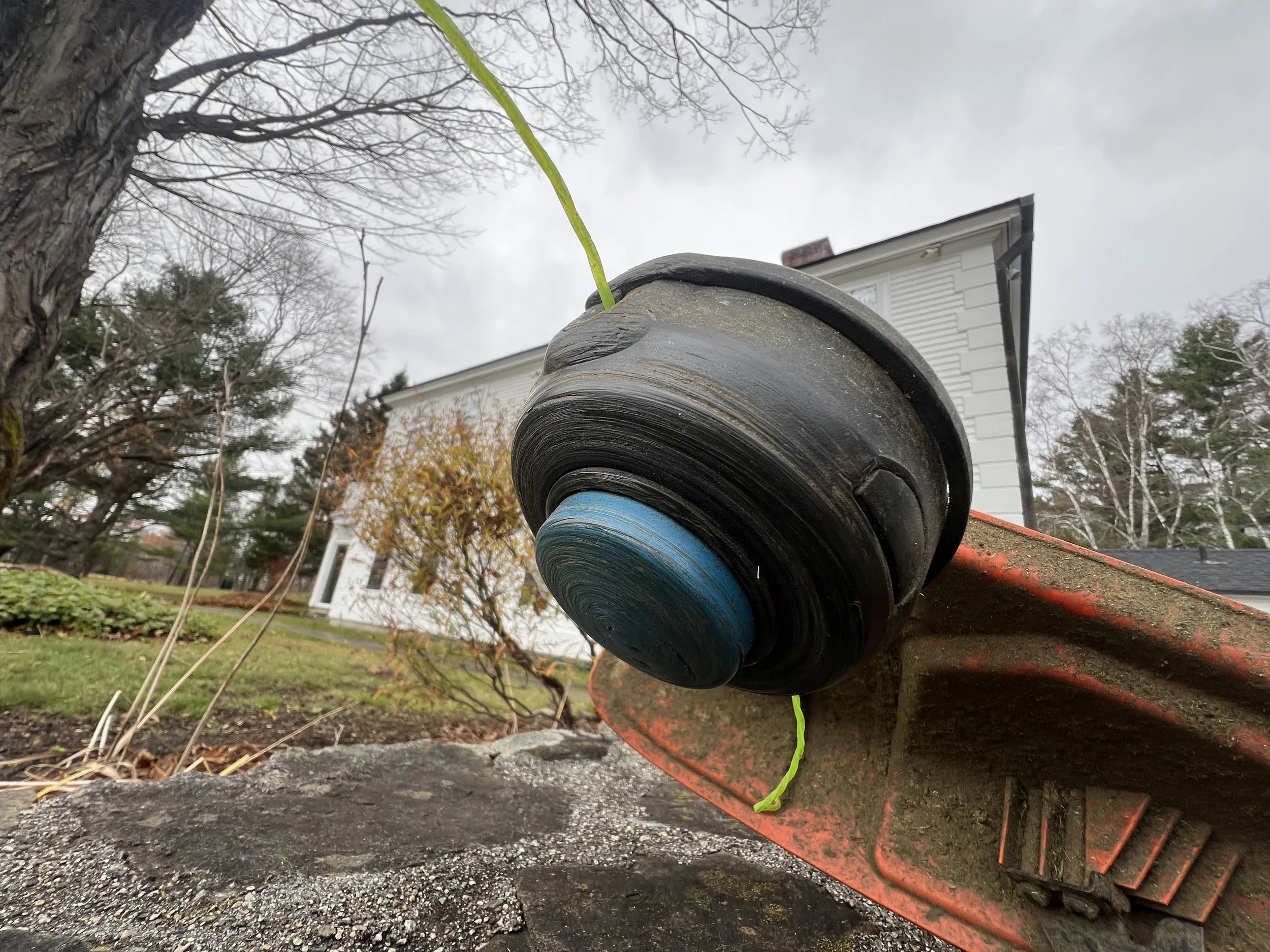
To make it through that kind of material, I switched from light trimmer line to a heavier, twisted variety. The lighter line just vanished as fast as it came out. With the heavier line and a little technique, the 128LD punches well above its weight. It won’t bulldoze through the thick stuff like a pro brushcutter, but it’ll wear it down with patience and technique.
When the going gets tough, I’ve learned not to dig in. Torque would help, but this isn’t a torque-heavy engine. Instead, it thrives on finesse — high RPMs, steady motion, and a bit of mechanical empathy. If you don’t push it too hard, it doesn’t fight back.
Limitations
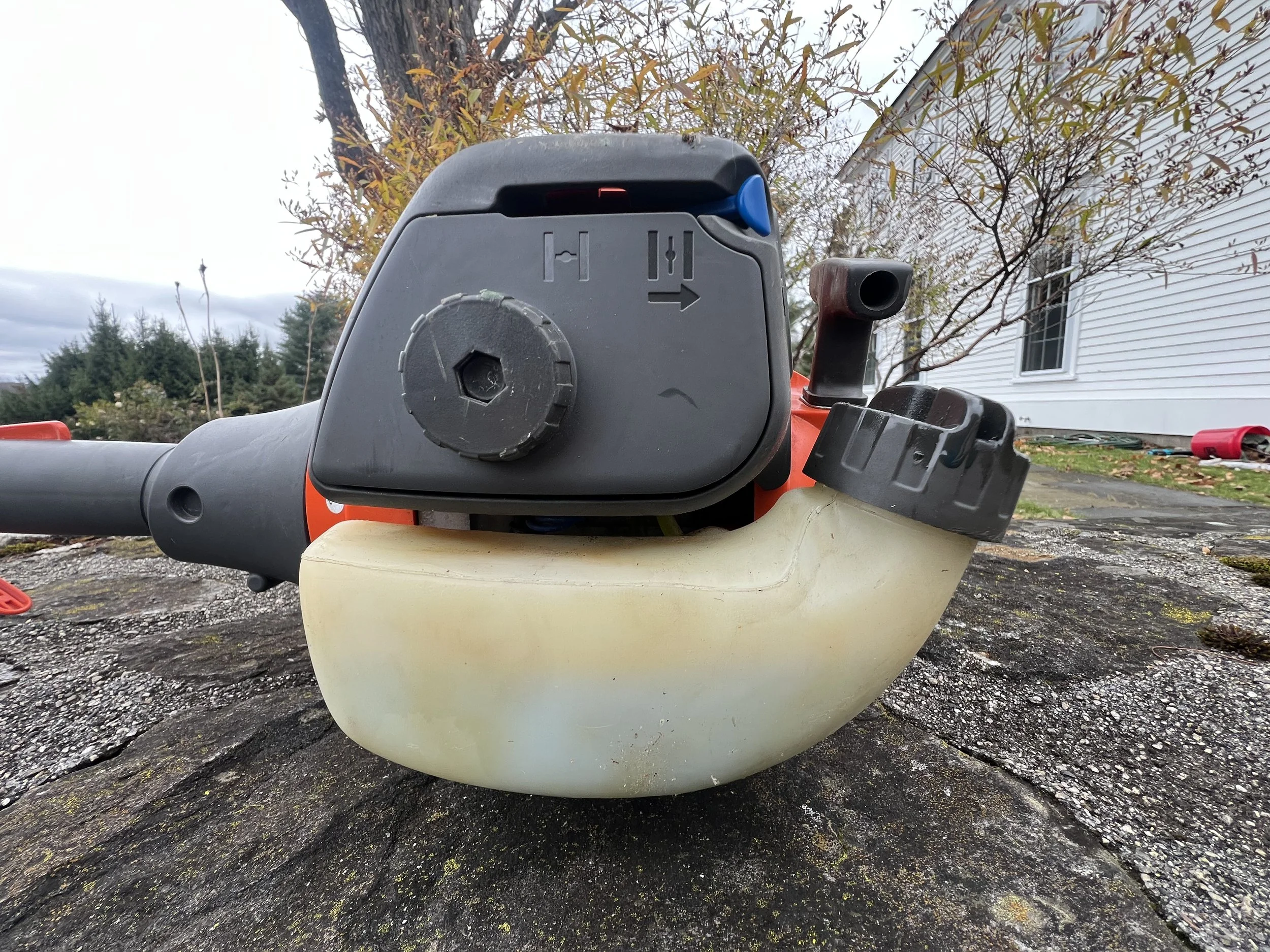
No amount of praise changes the fact that the 128LD is a homeowner trimmer, not a field-clearing machine. It lacks the torque, the gear reduction, and the mass of a true brushcutter. When you try to use it like one, it lets you know — it’ll bog if you dig too deep or feed too much line into heavy brush. After long clearing sessions, the clutch housing can get warm, and you start to sense the limits of what it’s designed to handle. Keep a can of mixed gas nearby if you’ll be out all day, too.
Still, the durability of this particular unit has defied all expectations by more than a small amount. It has lived a much harder life than it was built for, and it continues to start, run, and work with me — so long as I work with it. That, in a way, is the story of this tool.
The Husqvarna 128LD is an unassuming little machine, but it’s a lesson in what good design and mechanical empathy can accomplish. It’s not built for acreage, yet it’s helped tame mine all the same. It’s not particularly powerful, but it’s well built and persistent. With a willingness to listen to and work with the machine, it can do significantly more work than it was designed for.
For small yards, what it was actually built for, it’s an ideal choice. Relatively inexpensive, well built, lightweight, intuitive to operate and work on, and good looking to boot. For large properties, it’s an unlikely survivor. And for me, it’s become a symbol of practicality: proof that with care, patience, and a bit of respect for the machine, even a lightweight trimmer can take on heavy work and earn its keep year after year.
Maintenance
Ease of Use
The 128LD starts easily and runs willingly, provided you respect its limits. Cold starts take a few pulls, warm restarts are almost instant, and once it’s running, it has that high, smooth, wasp-like tone that tells you it’s happy. The controls are intuitive — choke, primer, kill switch — all in familiar places. The auto-return stop switch that resets itself after shutdown is a small but welcome detail.
With small engines like this, the rhythm of use matters as much as the raw power. To get the best out of it, you learn to work with the machine. I run it wide open almost all the time, feathering the angle and depth of cut rather than the throttle. It doesn’t have torque to spare, so the trick is to keep the RPMs high and the load light — let the speed do the work, because the torque isn’t there to do it, ha.
When tackling heavy growth, I use a light touch and a fast sweep, knocking vegetation down in layers rather than trying to take it all at once. It’s a dance: advance, back off, advance again. Used that way, it’s astonishing what this little machine can clear.
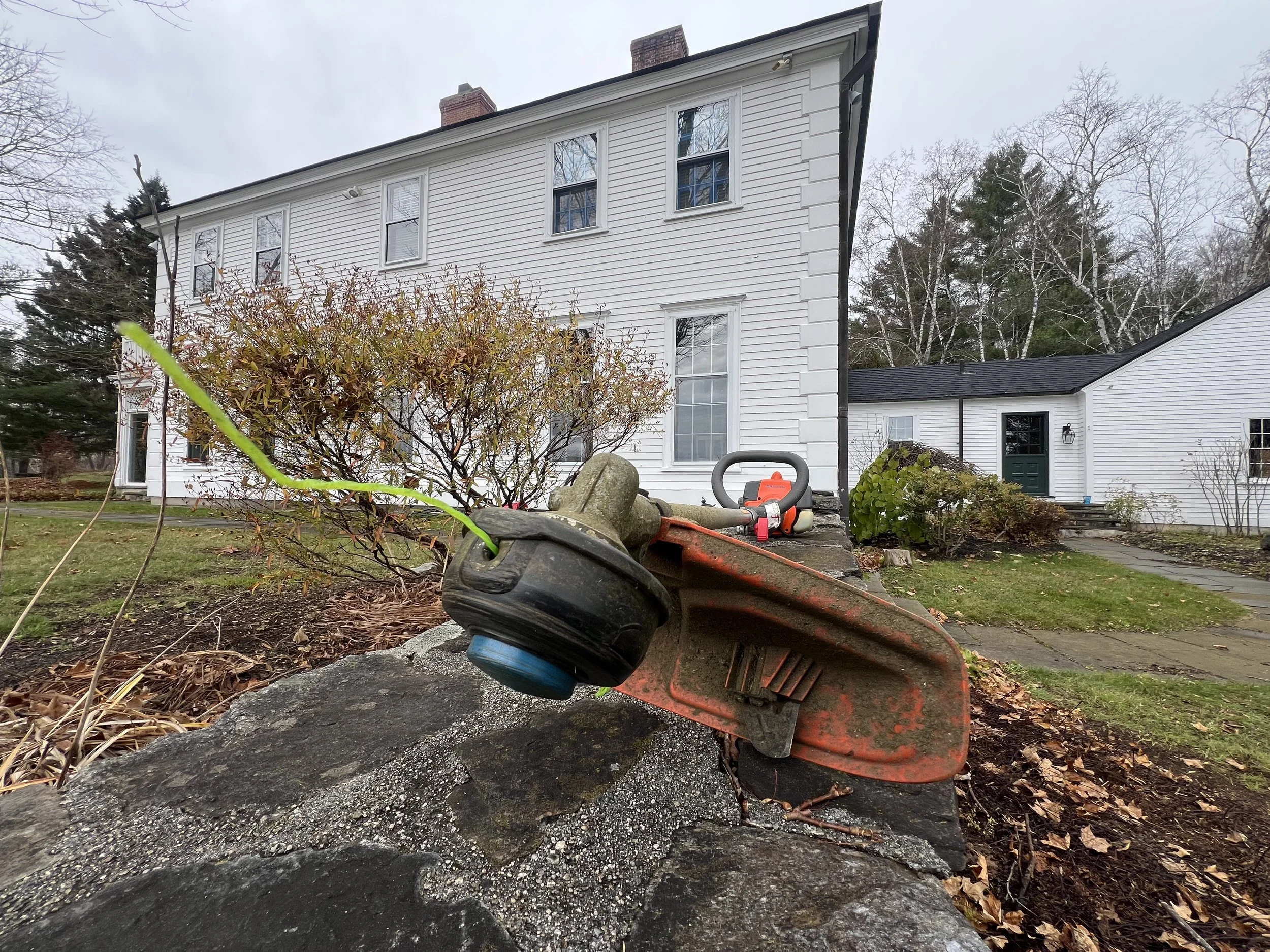
This trimmer has survived years of use in two vastly different climates — the heat and humidity of Florida, and the cold, damp shoulder seasons of New Hampshire. Through all that, it has remained stubbornly reliable.
I service it myself annually: clean the air filter, replace the plug, check the fuel lines, stabilize the mix before winter. The carburetor stays clean with stabilized fuel, and even after months on the shelf, it usually fires up like it was never stored at all. The fuel economy is good, the oil mix stays consistent, and the head components — including the T25 bump feed — have held up admirably with regular use.
It’s worth noting that everything on this trimmer is accessible. There’s no fighting it to perform basic maintenance. You can tell Husqvarna expected owners to maintain these at home, and designed accordingly. It’s a refreshing simplicity in an age of sealed, disposable tools.
Final Thoughts
The Husqvarna 128LD wasn’t bought for my current situation. I originally picked it up a few years ago in Florida, for my tiny suburban yard. I’d use it for trimming edges along the sidewalk, around equipment, and the occasional overgrown corner of the fence line. It was a straightforward machine meant for light work, and in that context, it performed flawlessly.
Fast forward a few years, and the same trimmer now lives not just in New Hampshire, but at Grandview - a truly wild environment demanding heavy tools and heavy use. On eight acres of steep terrain, unwieldy field, and thick northern overgrowth, it’s not the machine I would have chosen for that kind of work, but it’s the one I had. And frankly, against all odds, it has handled it far better than it ever should have.
Performance
Design & Build